VAN PHONG BAY AIRPORT TERMINAL #VHLArch
Project: Van Phong Bay Airport Terminal competition
Type: Concept Proposal
Location: Khanh Hoa, Vietnam
Phase 01 Design Consultant: Vo Huu Linh Architects (VHLArch)
“Tạo không gian – Khơi nguồn sống”
Create Space – Inspire Life
📞, Whatsapp: +84905 926 604
📧 vhlarch@gmail.com
Description:
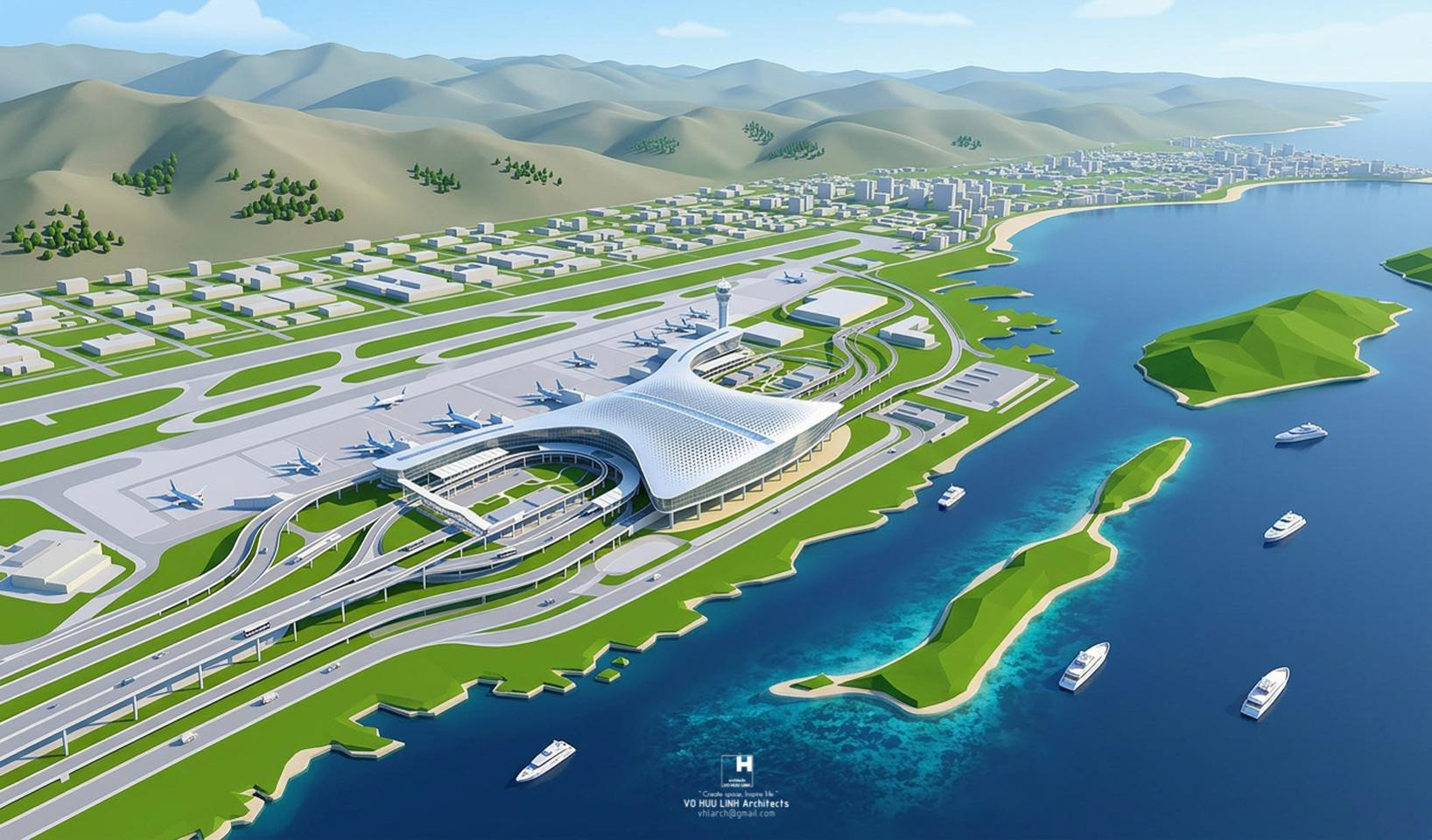
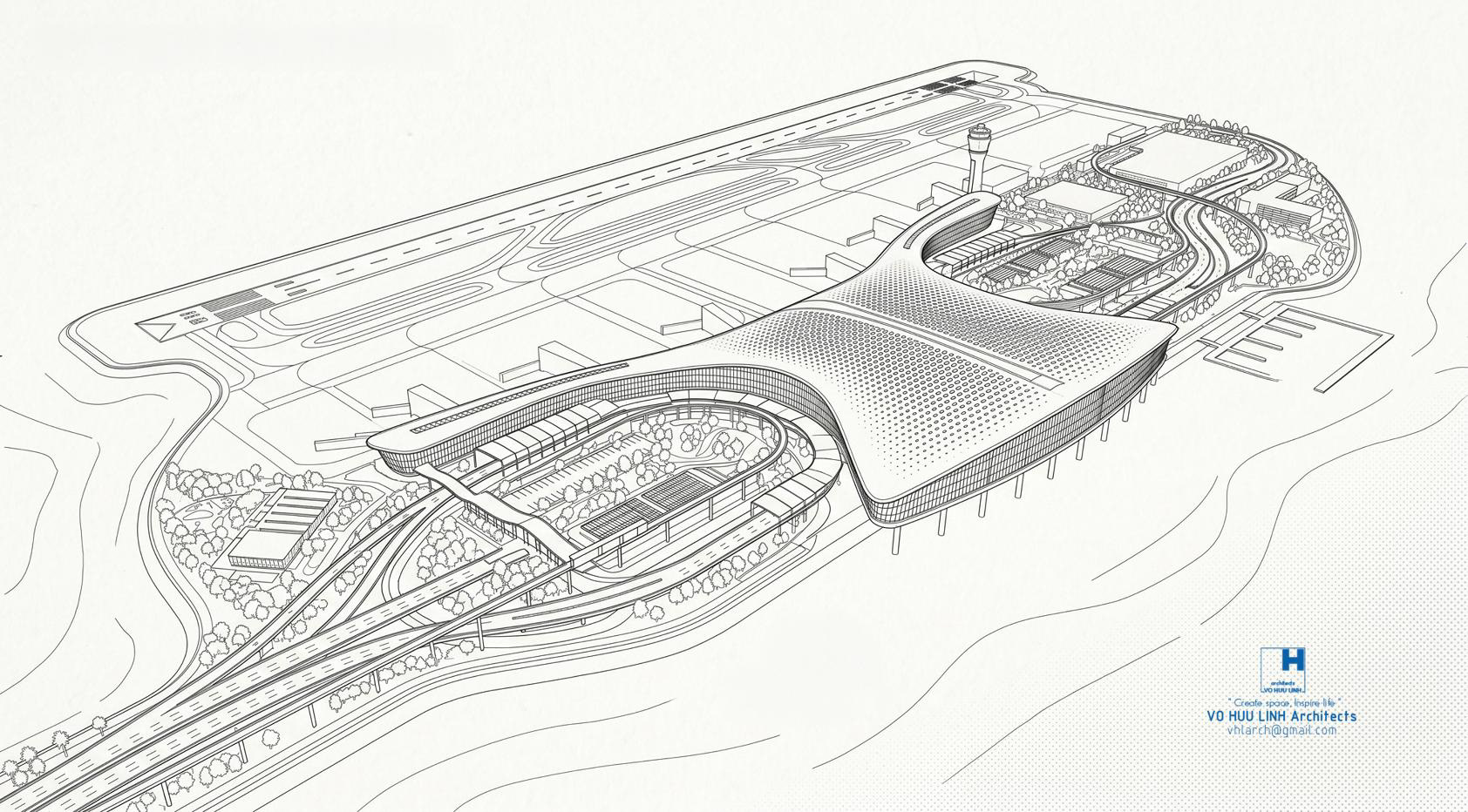
For decades, airports have largely been understood as massive infrastructural machines — environments primarily driven by operational efficiency, passenger capacity, and transportation performance. In many cases, architecture functioned merely as a symbolic shell representing technological progress and urban ambition. Today, however, under the growing pressures of climate change and environmental instability, particularly within coastal territories, this perception is gradually shifting.
Contemporary airports are no longer viewed solely as transportation facilities. Increasingly, they are being reconsidered as complex environmental ecosystems in which architecture must engage directly with climate, geography, and the natural conditions of the territory in which it exists.
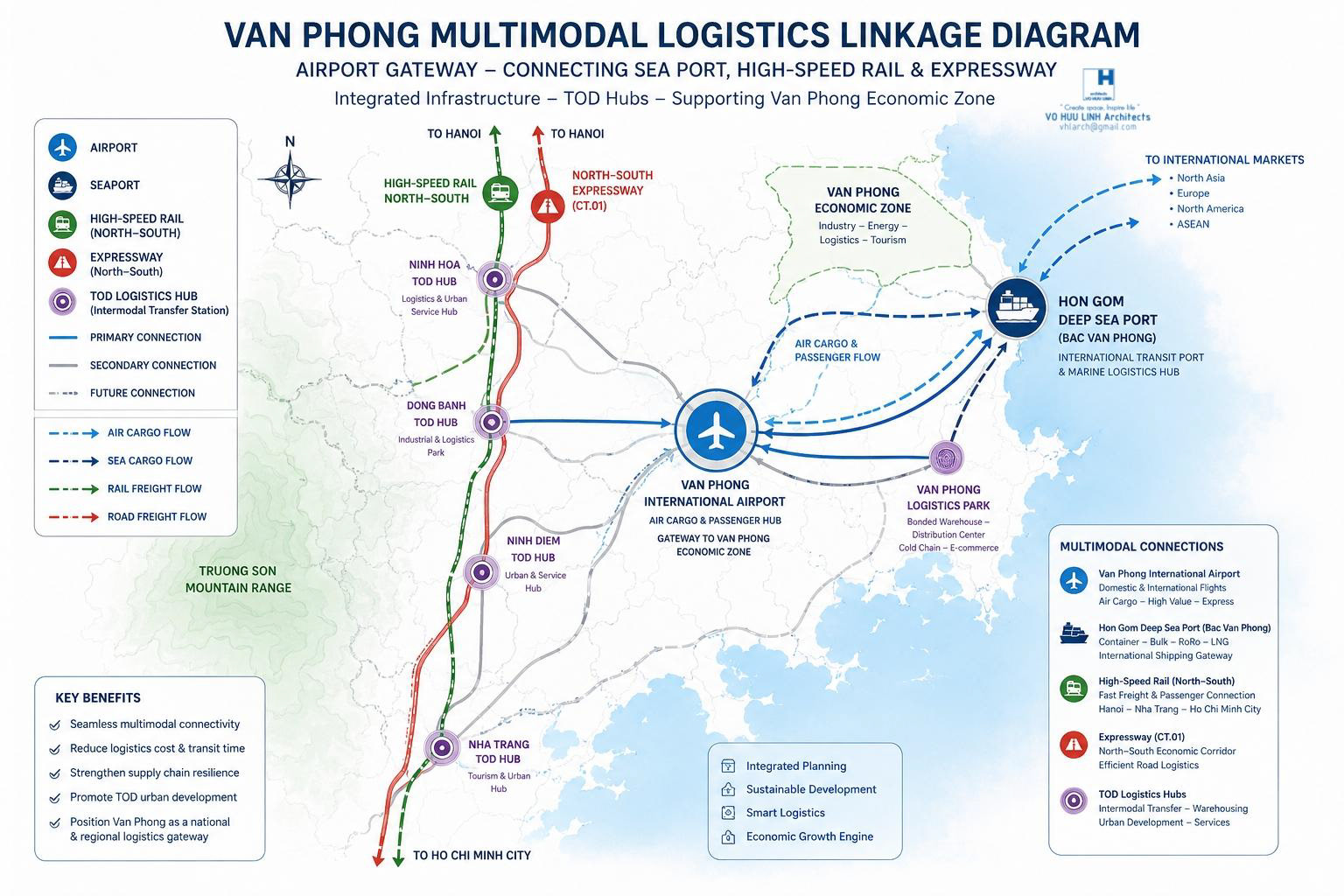
Van Phong Bay Airport Terminal, proposed by Vo Huu Linh Architects, is an exploration of this evolving approach.
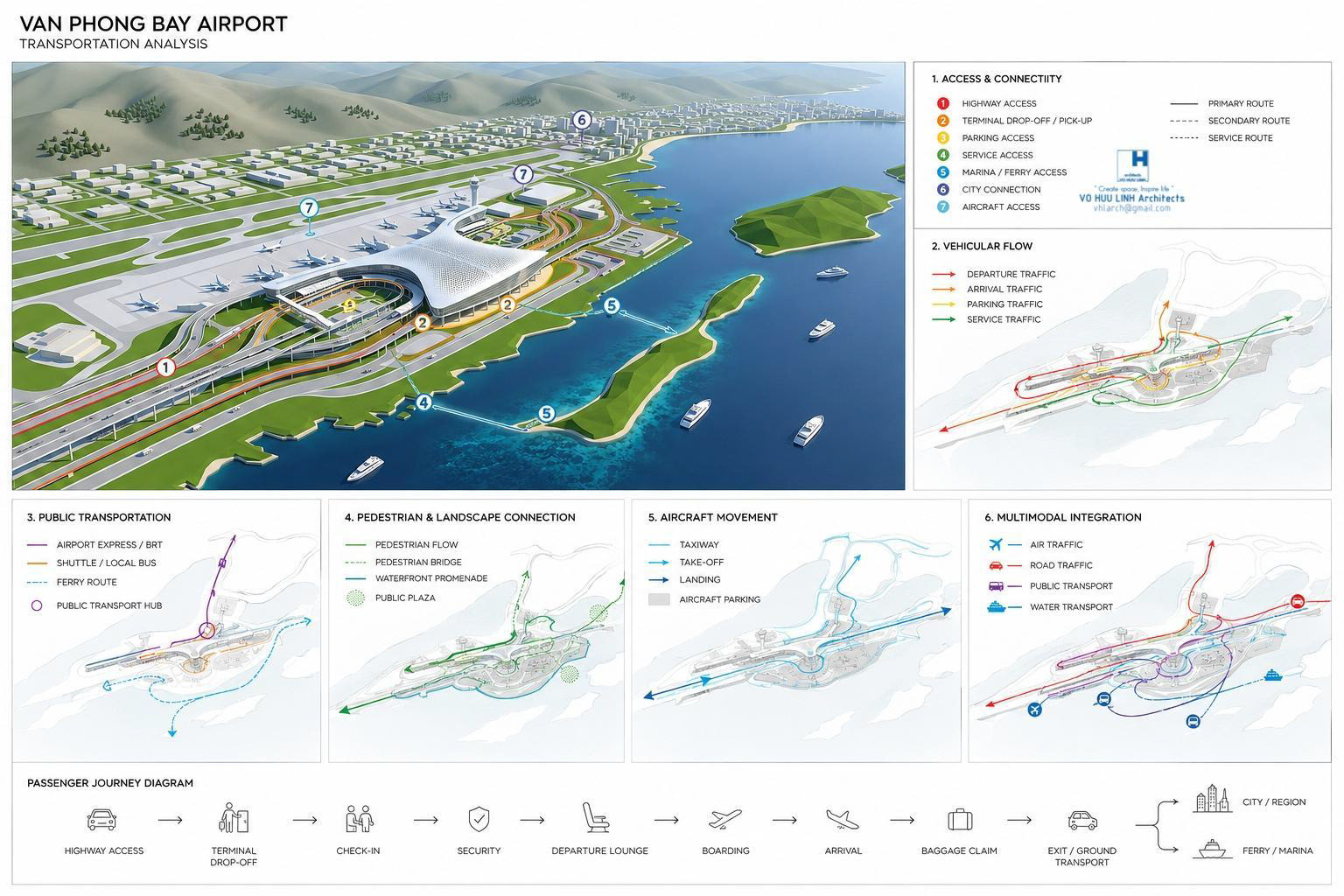
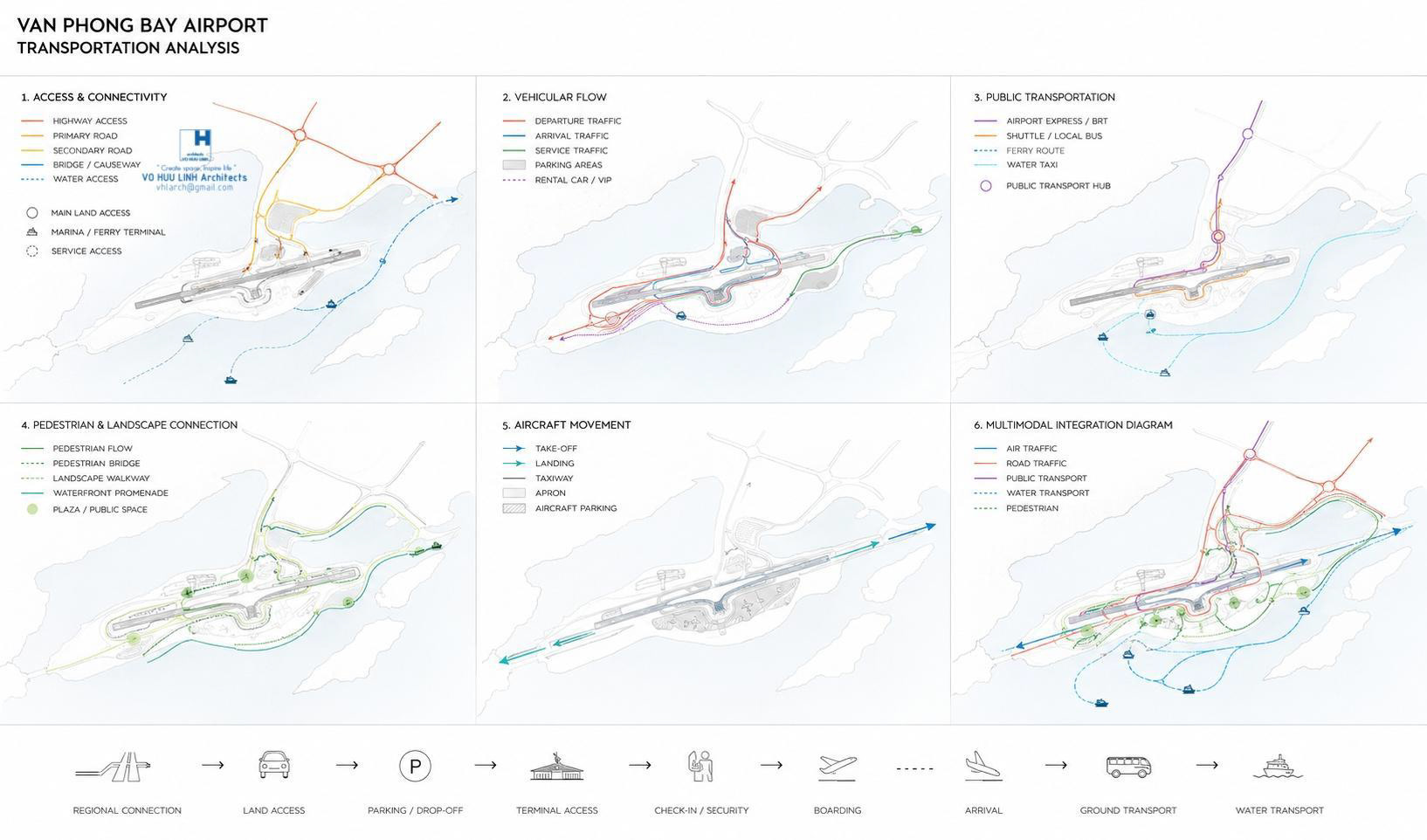
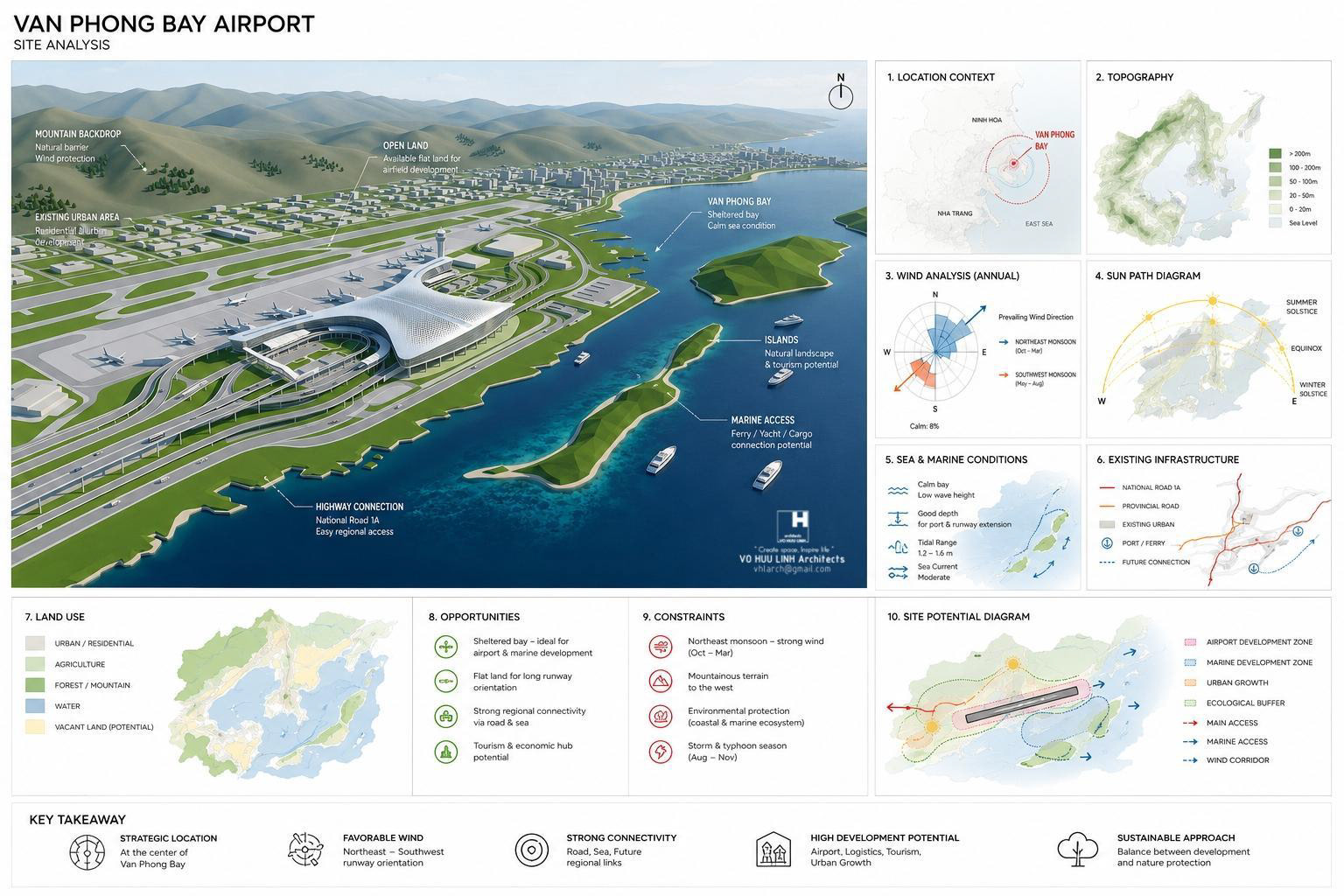
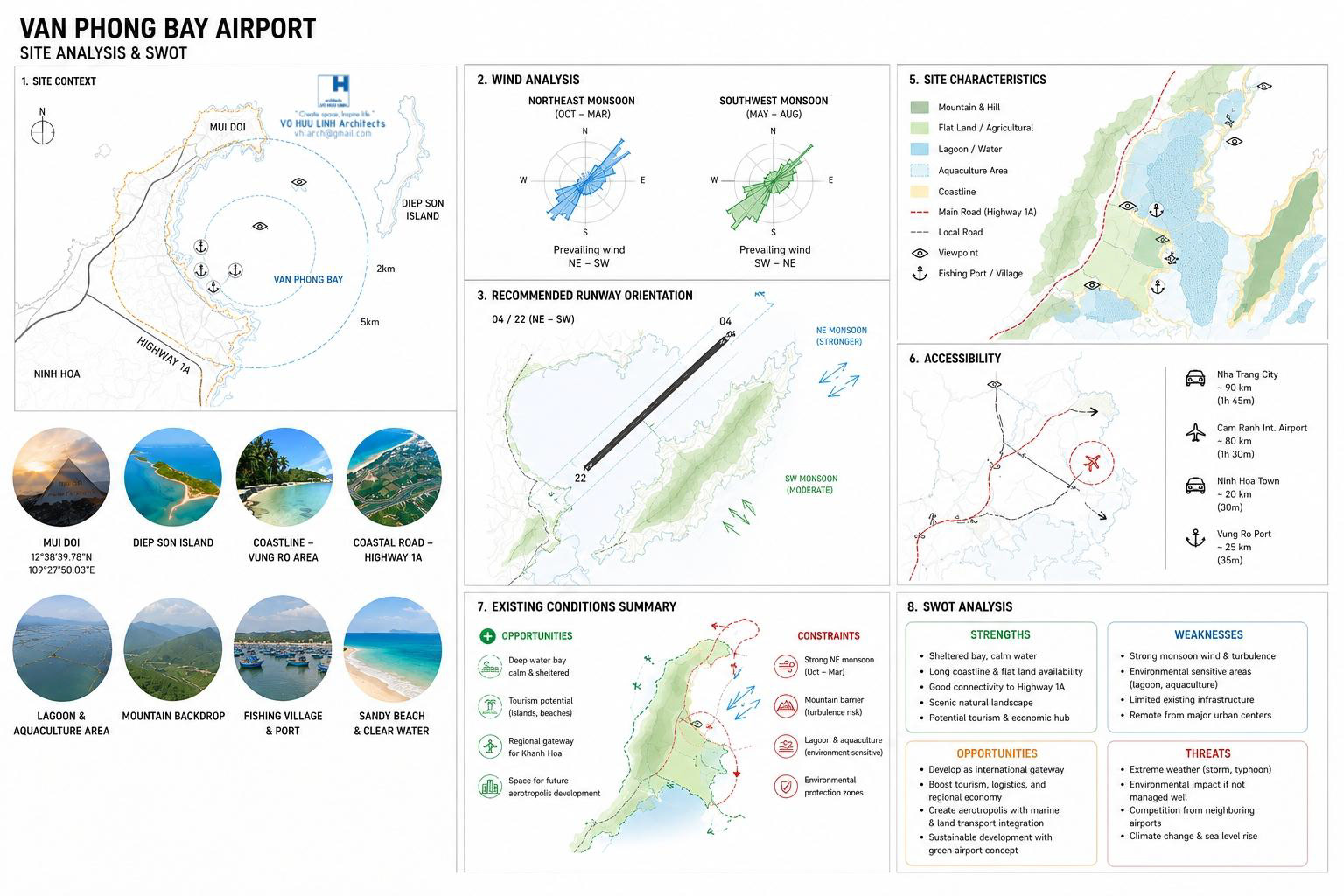
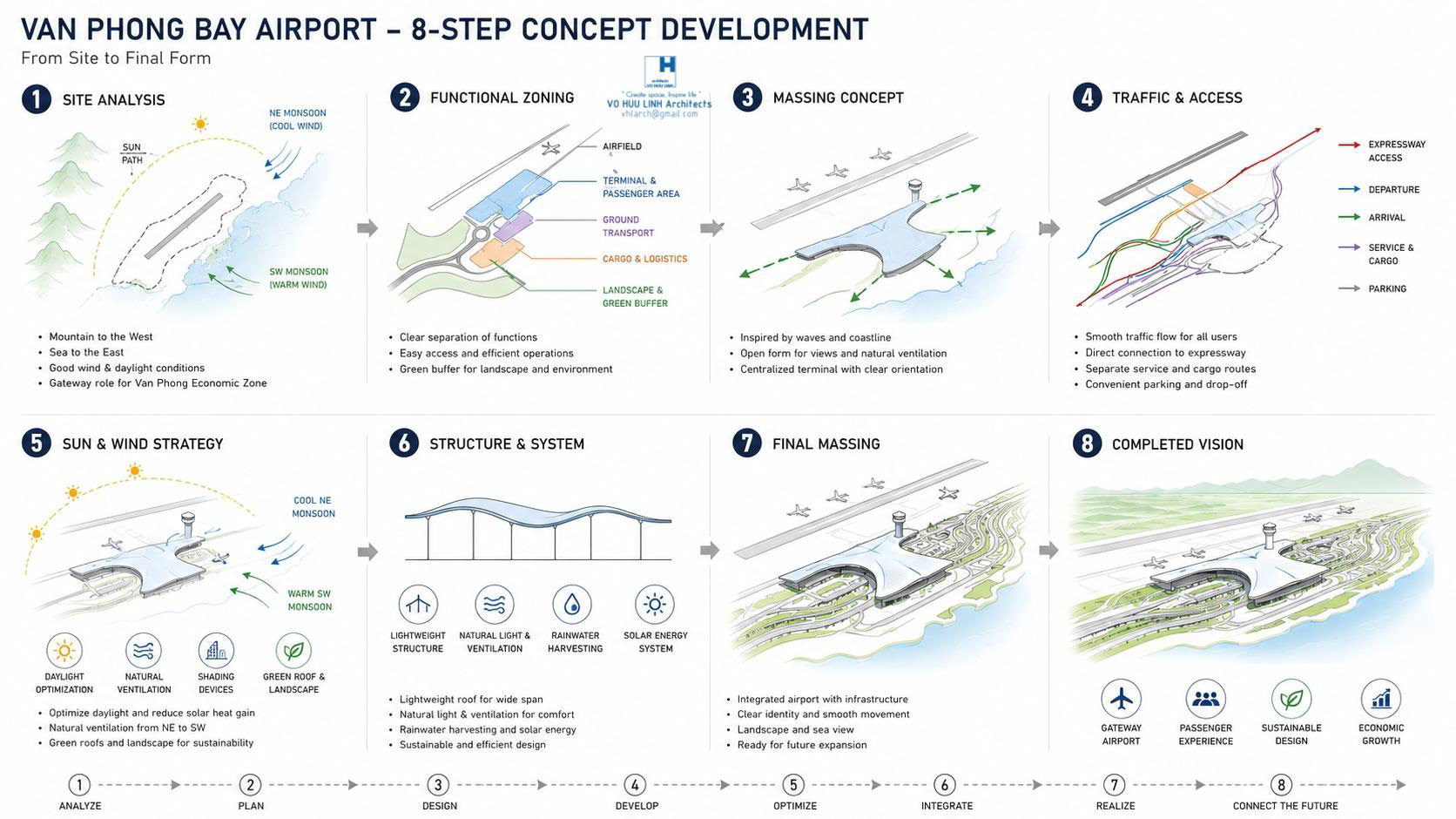
What distinguishes the project is its treatment of climate as a primary design generator rather than a technical problem resolved at the end of the process. Within tropical coastal conditions, wind becomes a determining force not only for aviation operations, but also for spatial organization and architectural form.
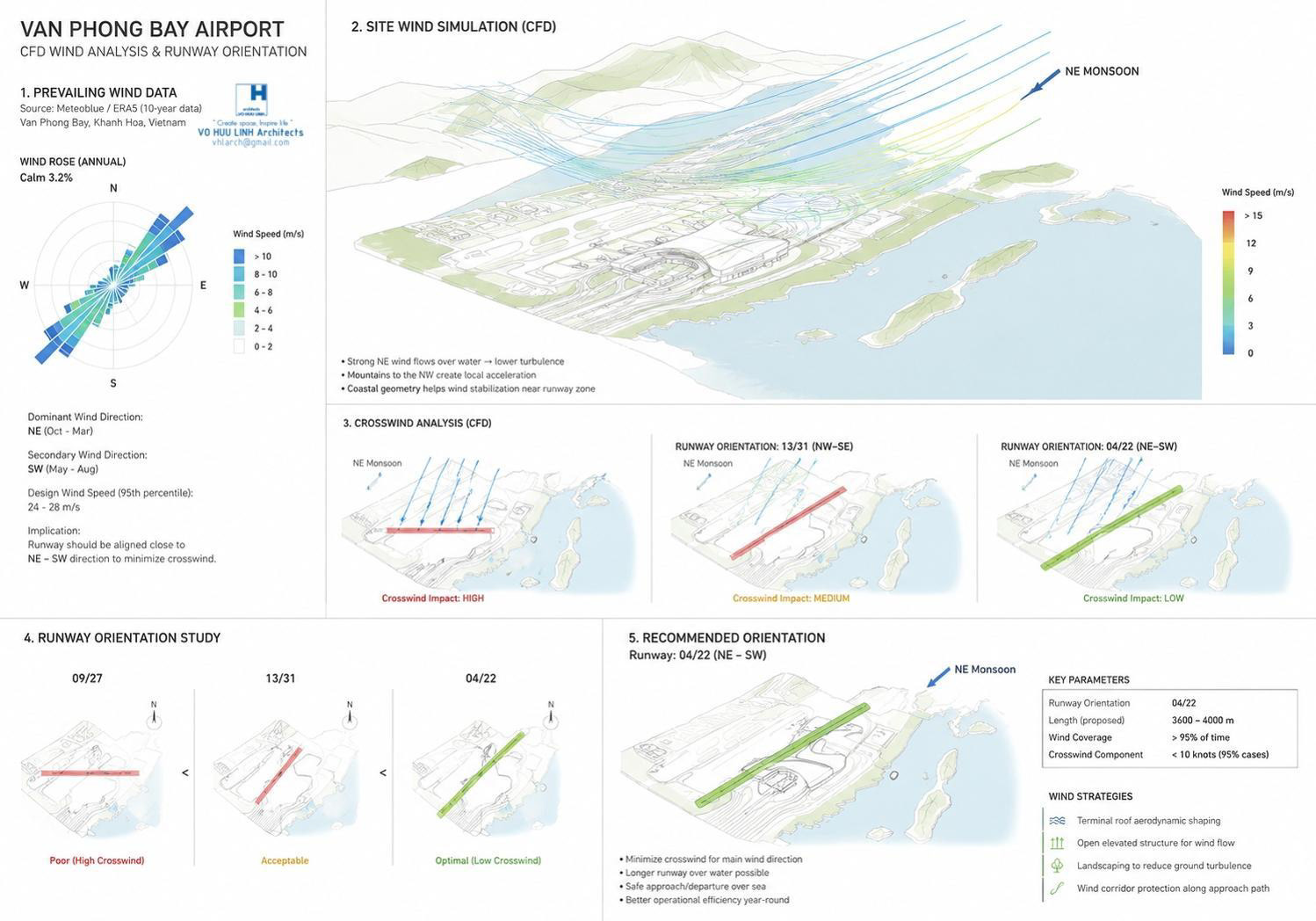
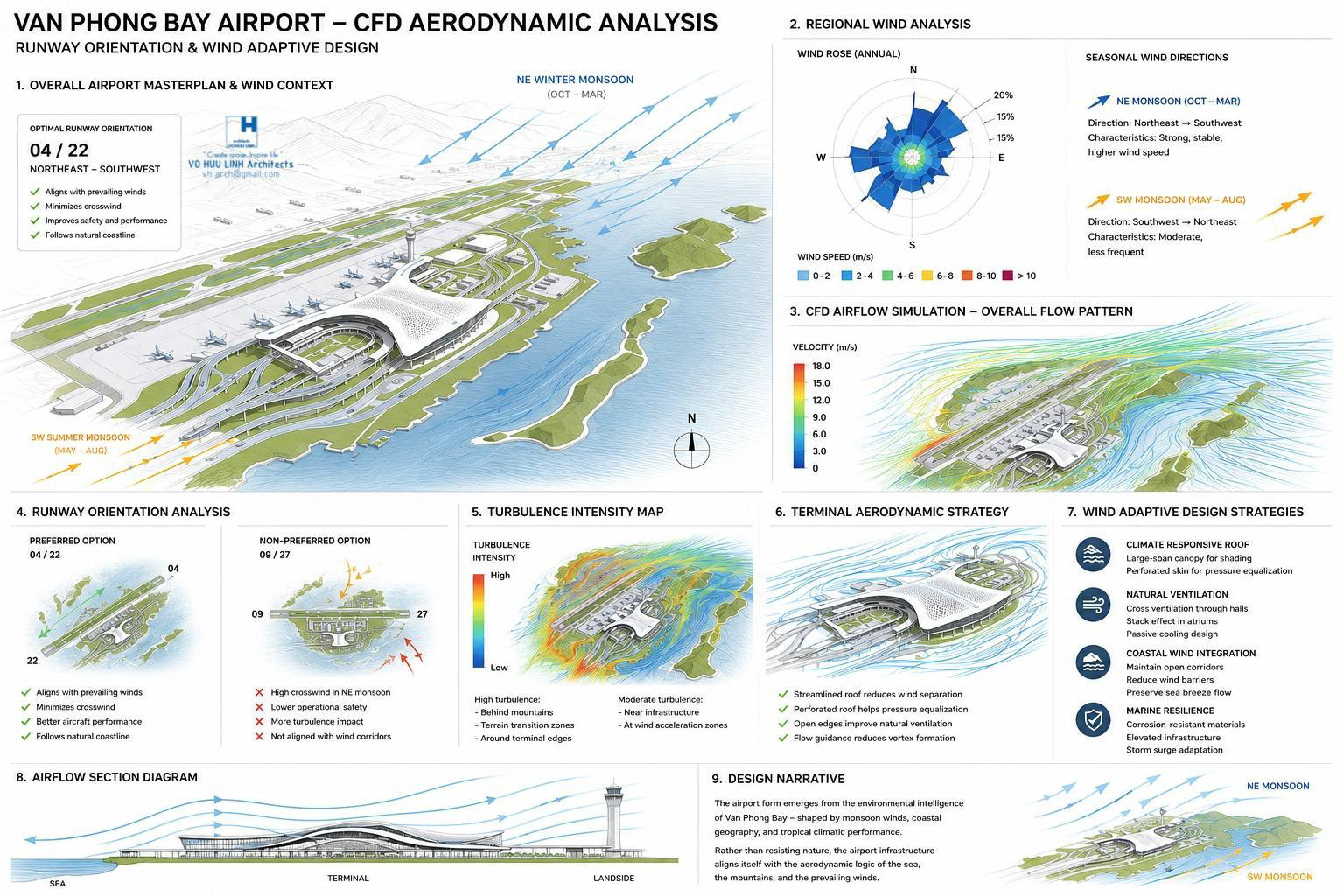
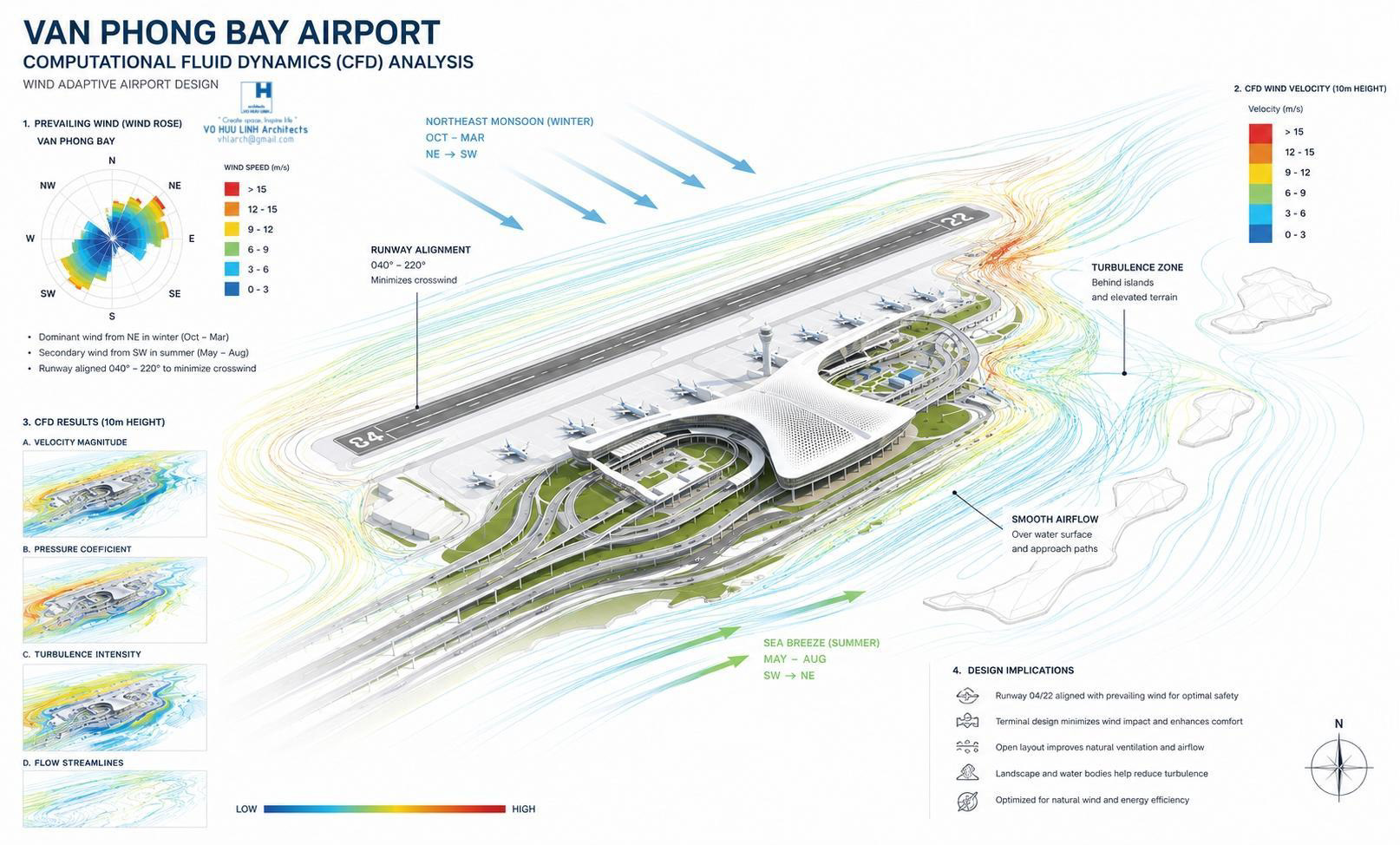
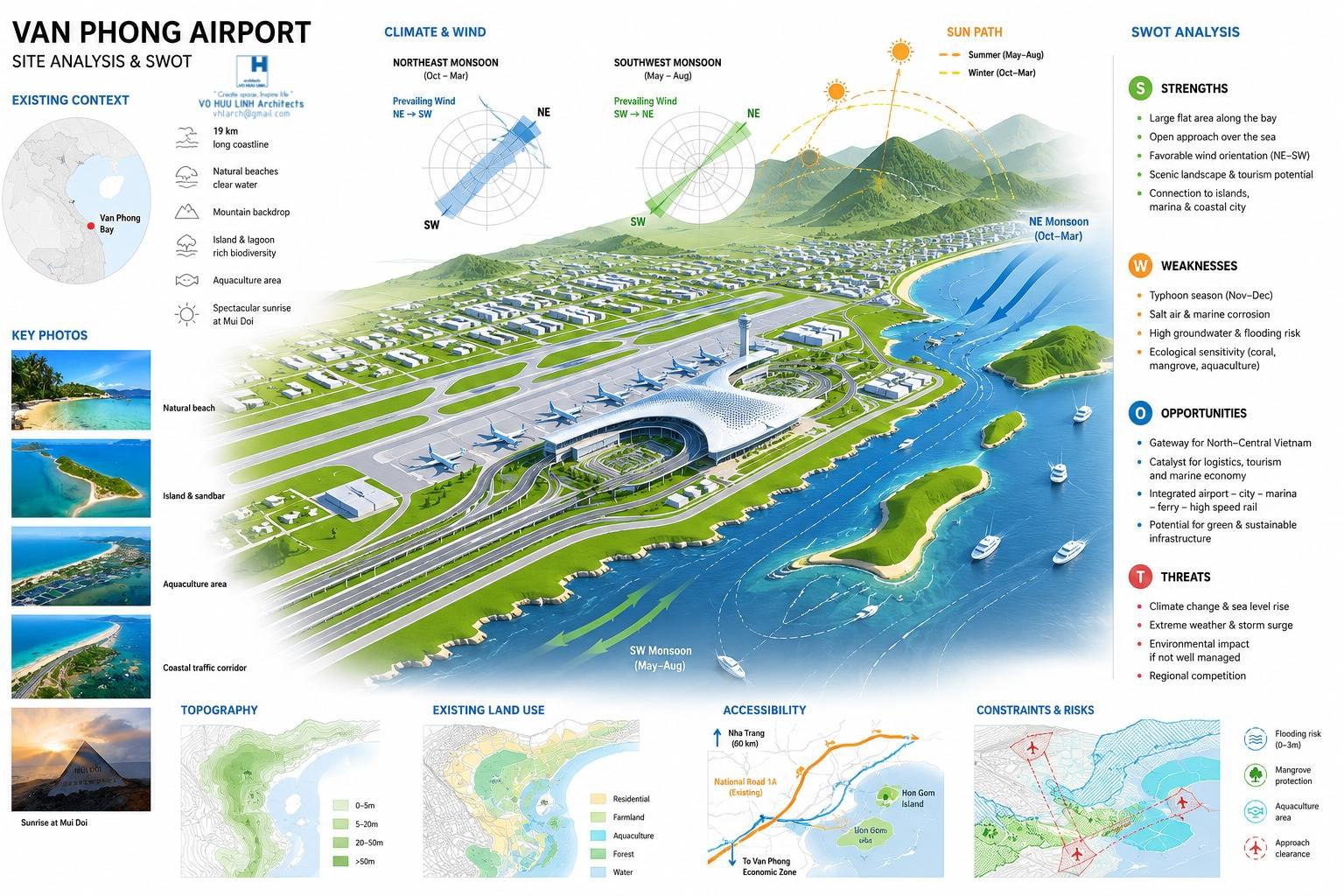
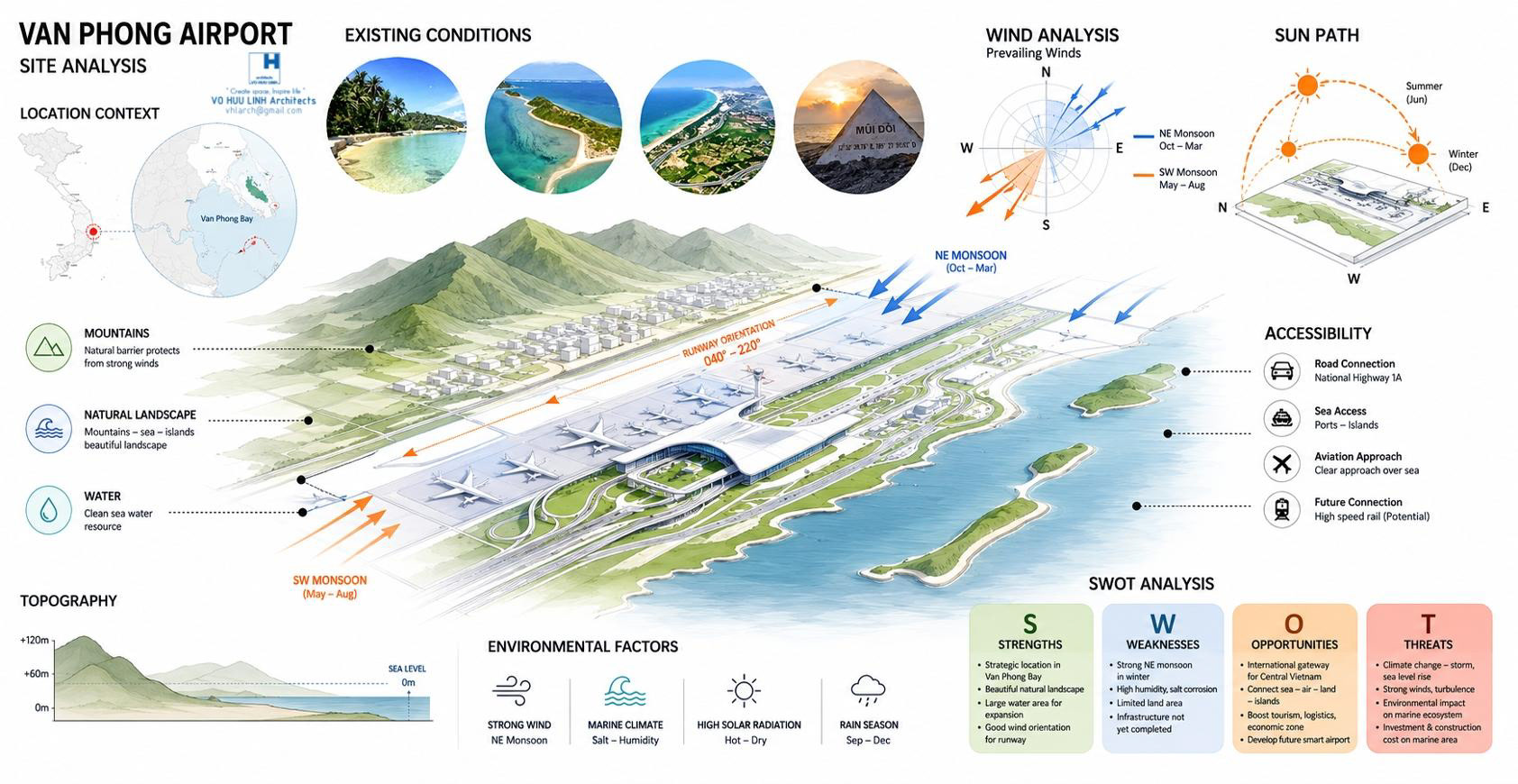
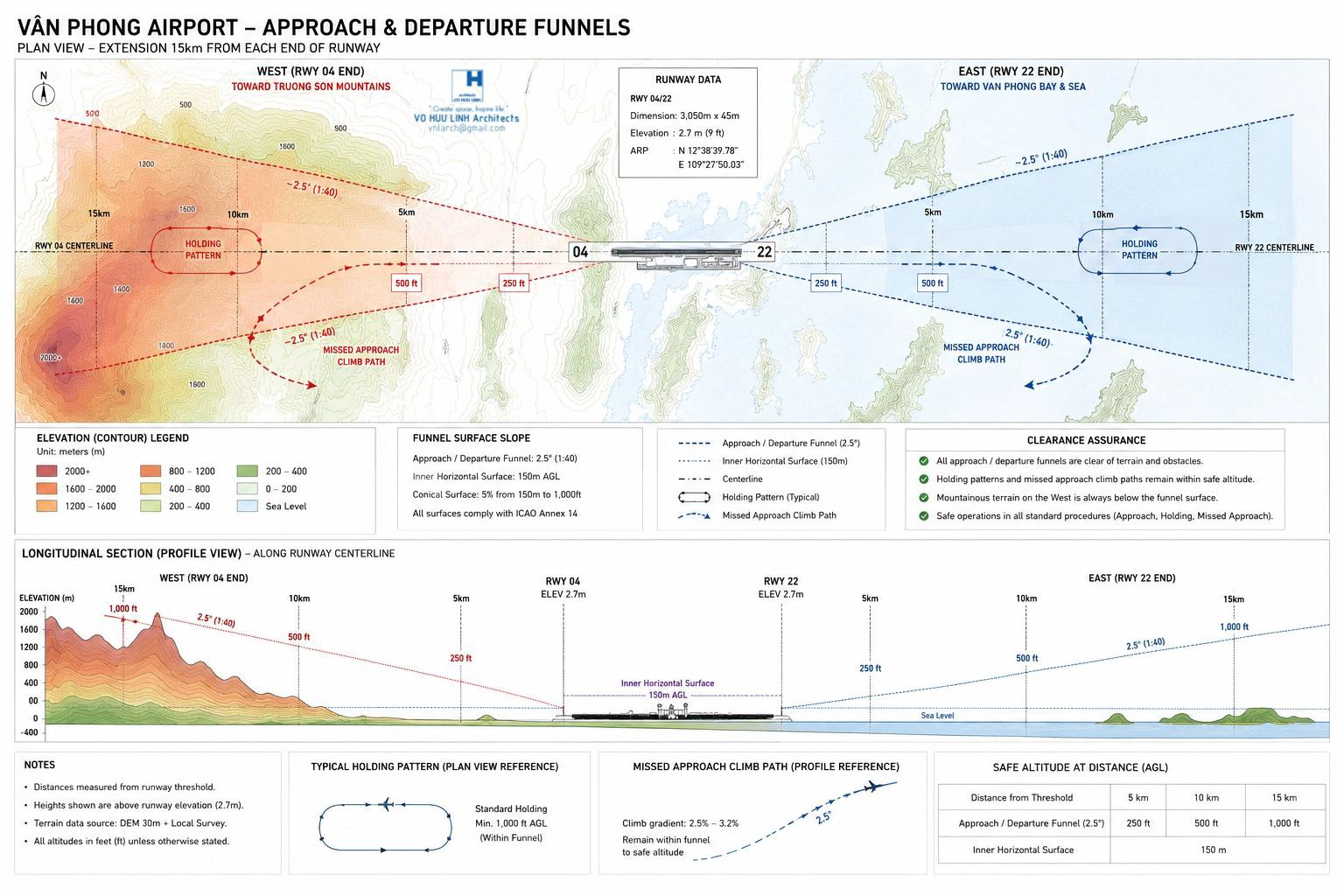
For any airport, runway orientation remains a critical issue. Even minor miscalculations in prevailing wind analysis can affect operational safety and long-term efficiency for decades. As a result, the design team approached the project through detailed studies of seasonal wind patterns, particularly the influence of Northeast monsoon winds, sea breezes, and the aerodynamic interaction between mountains, water surfaces, and large-scale infrastructure.
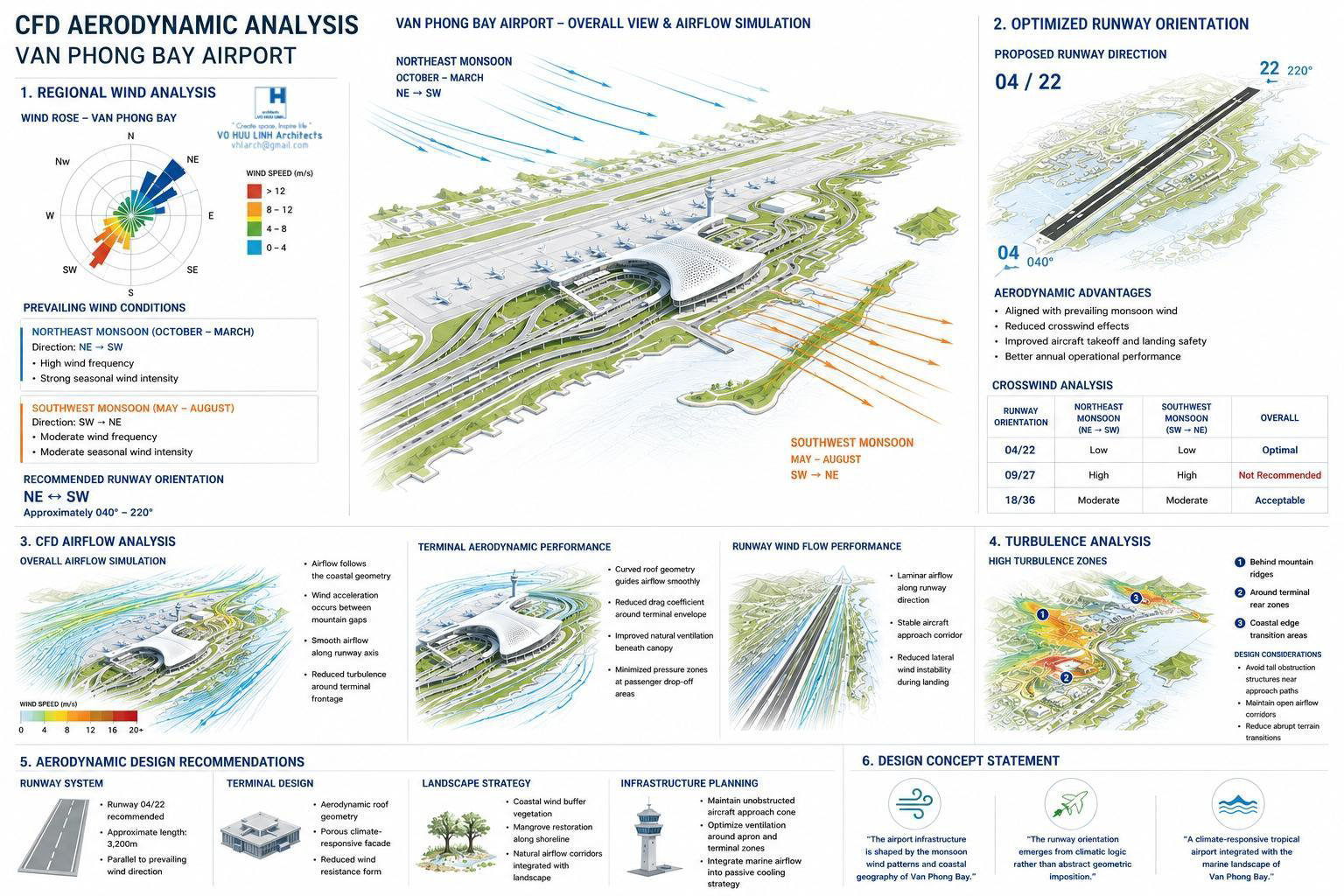
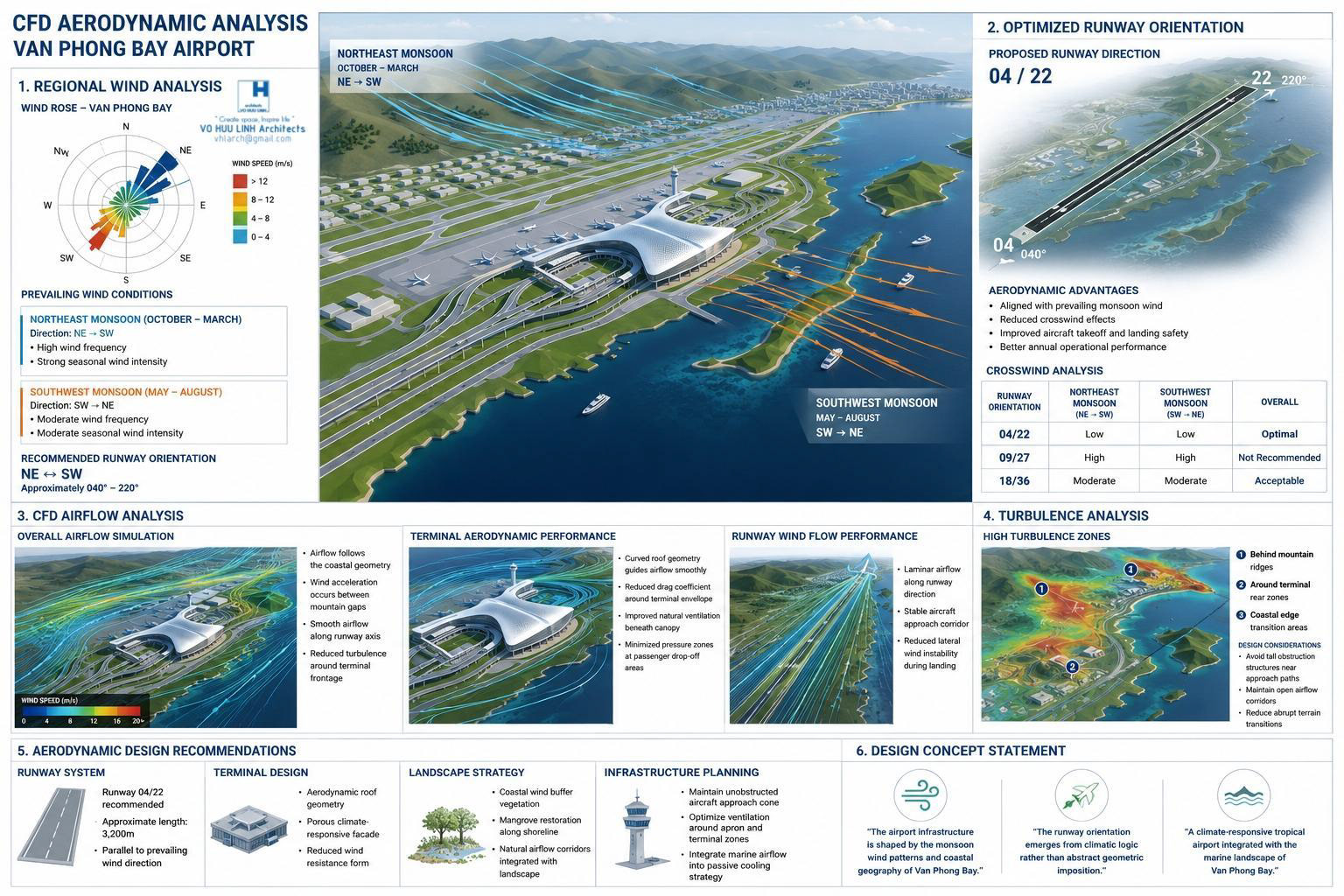
Through Computational Fluid Dynamics (CFD) simulations, airflow behavior was analyzed across the entire airport environment — including runways, terminal buildings, aprons, and surrounding coastal landscapes. These studies allowed the team to identify turbulence zones, wind acceleration corridors, pressure variations, and stagnant air pockets that could directly influence both environmental performance and spatial experience.
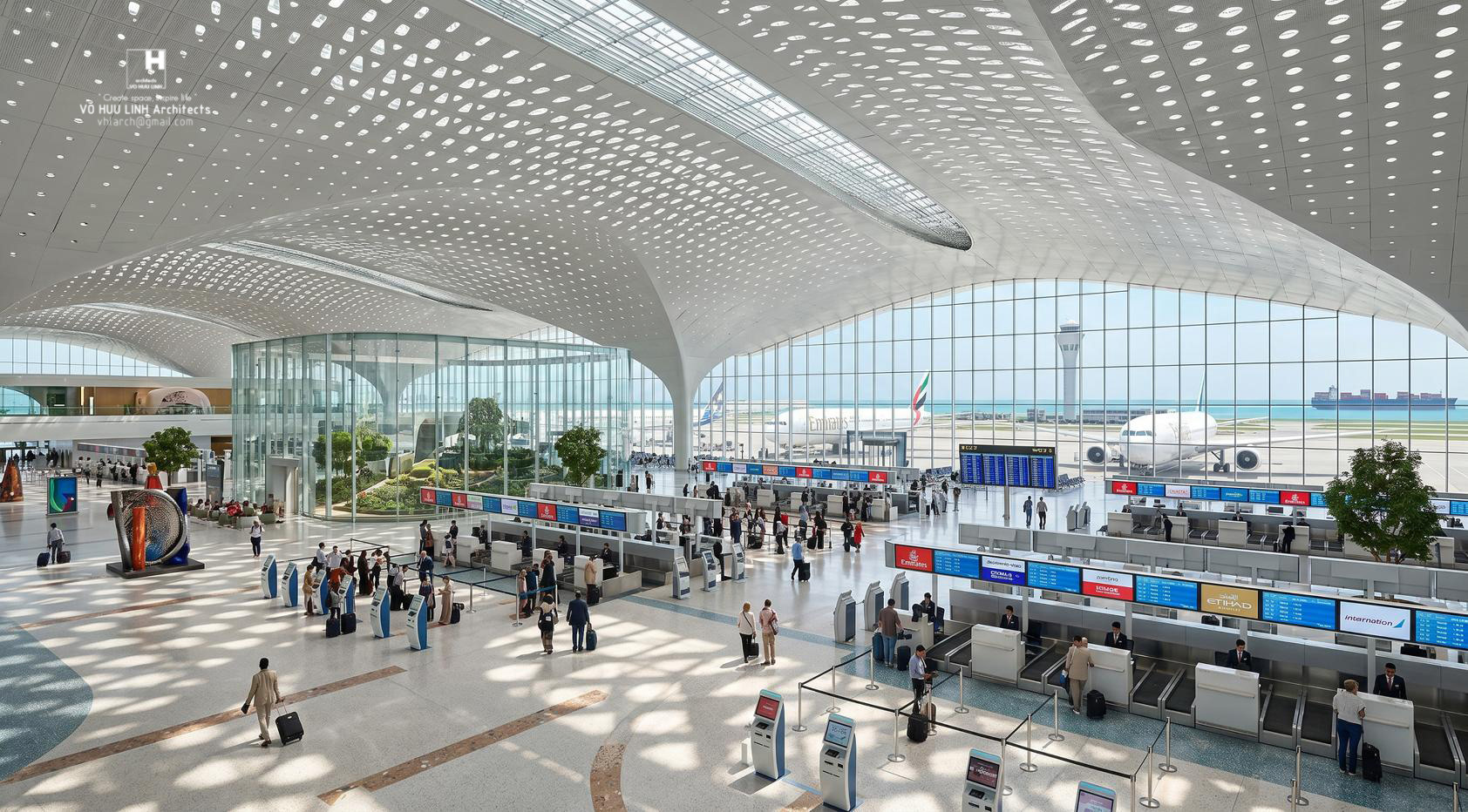
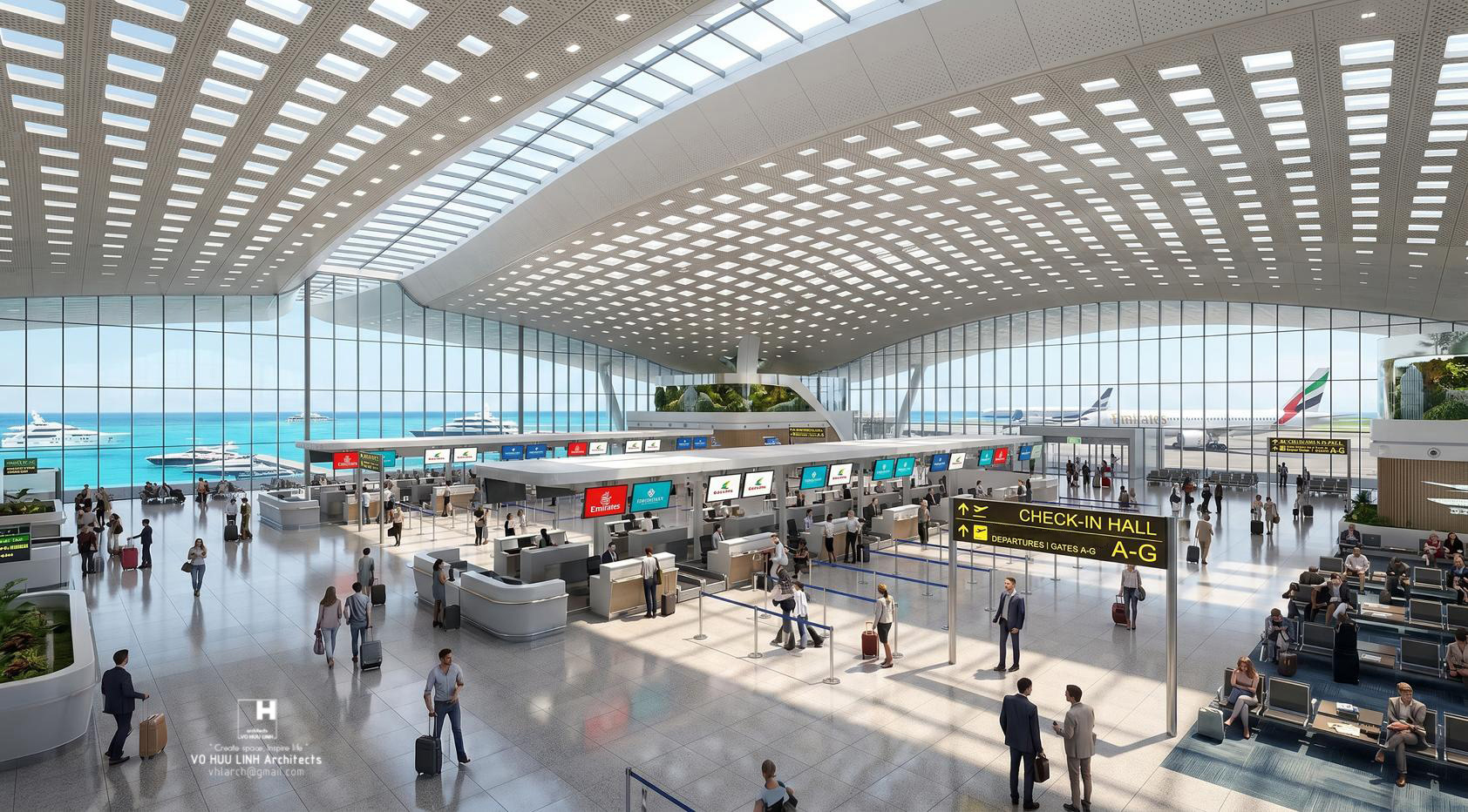
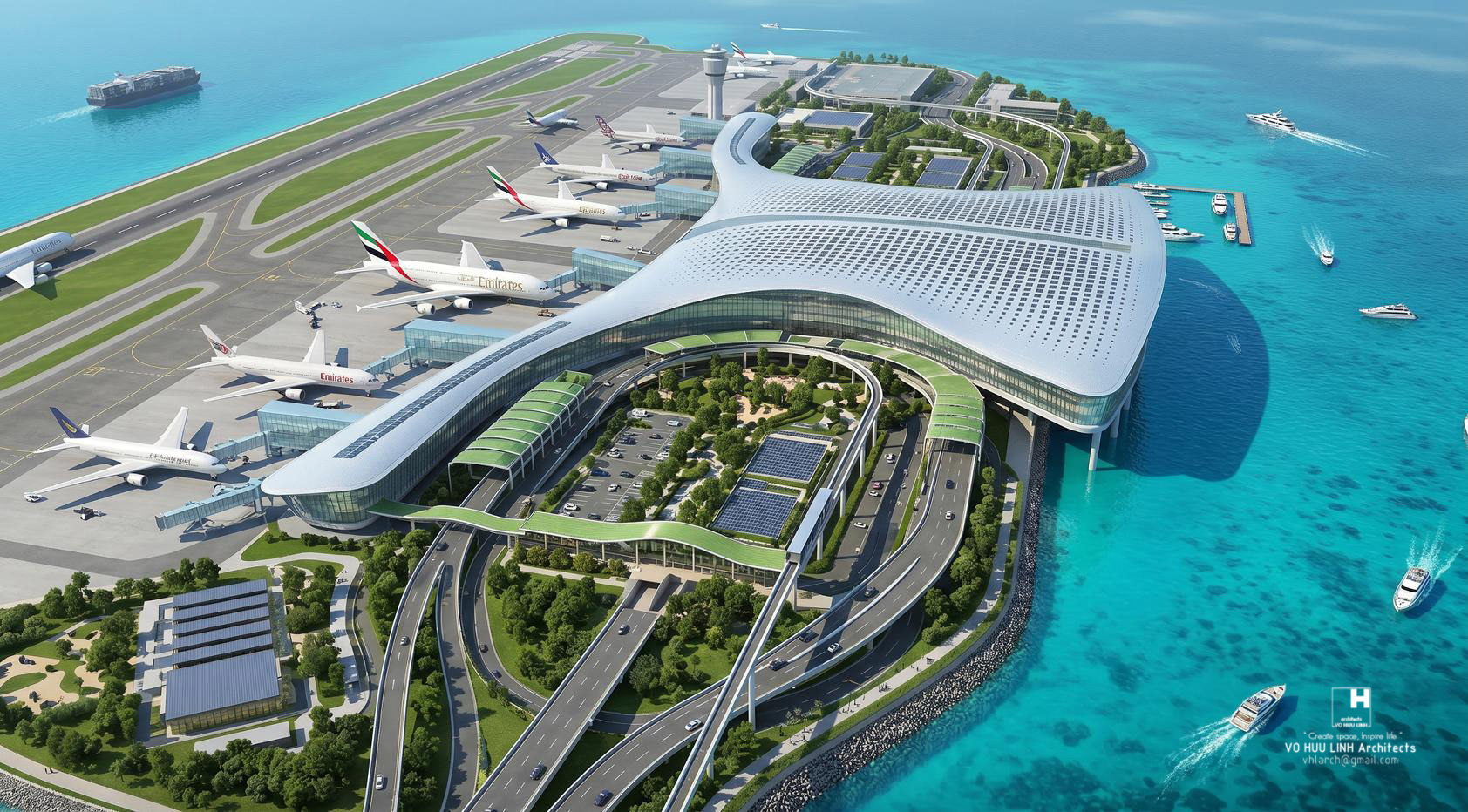
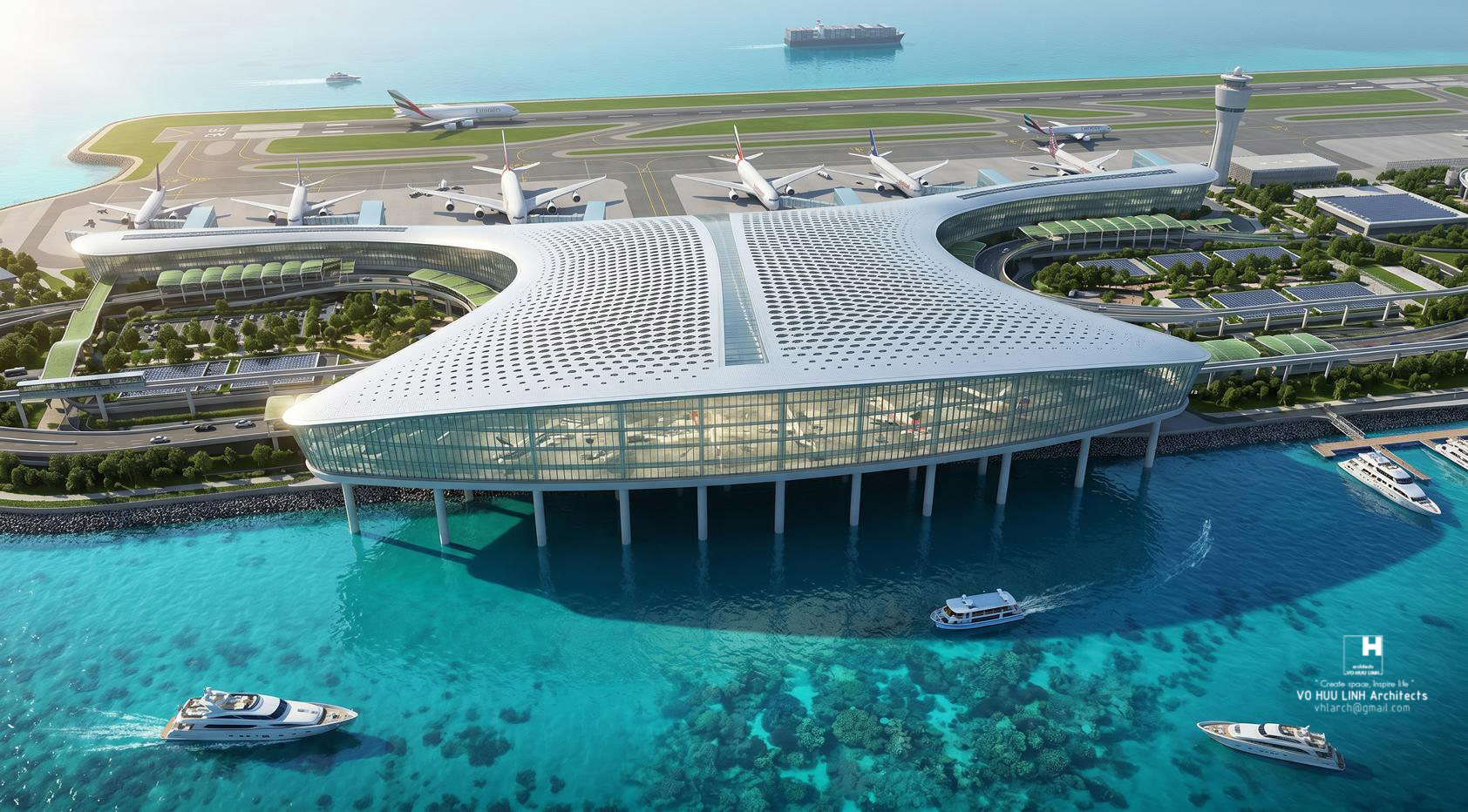
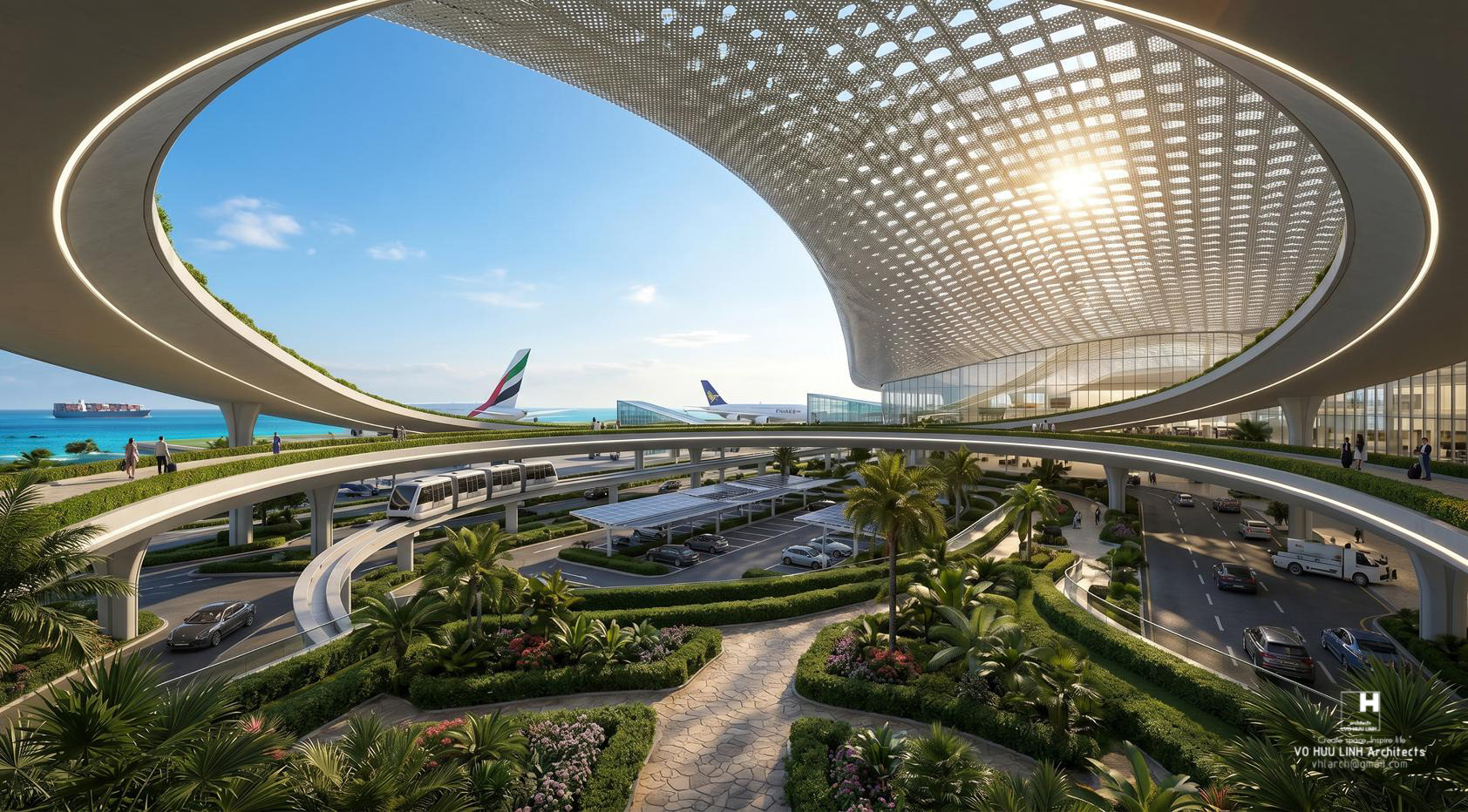
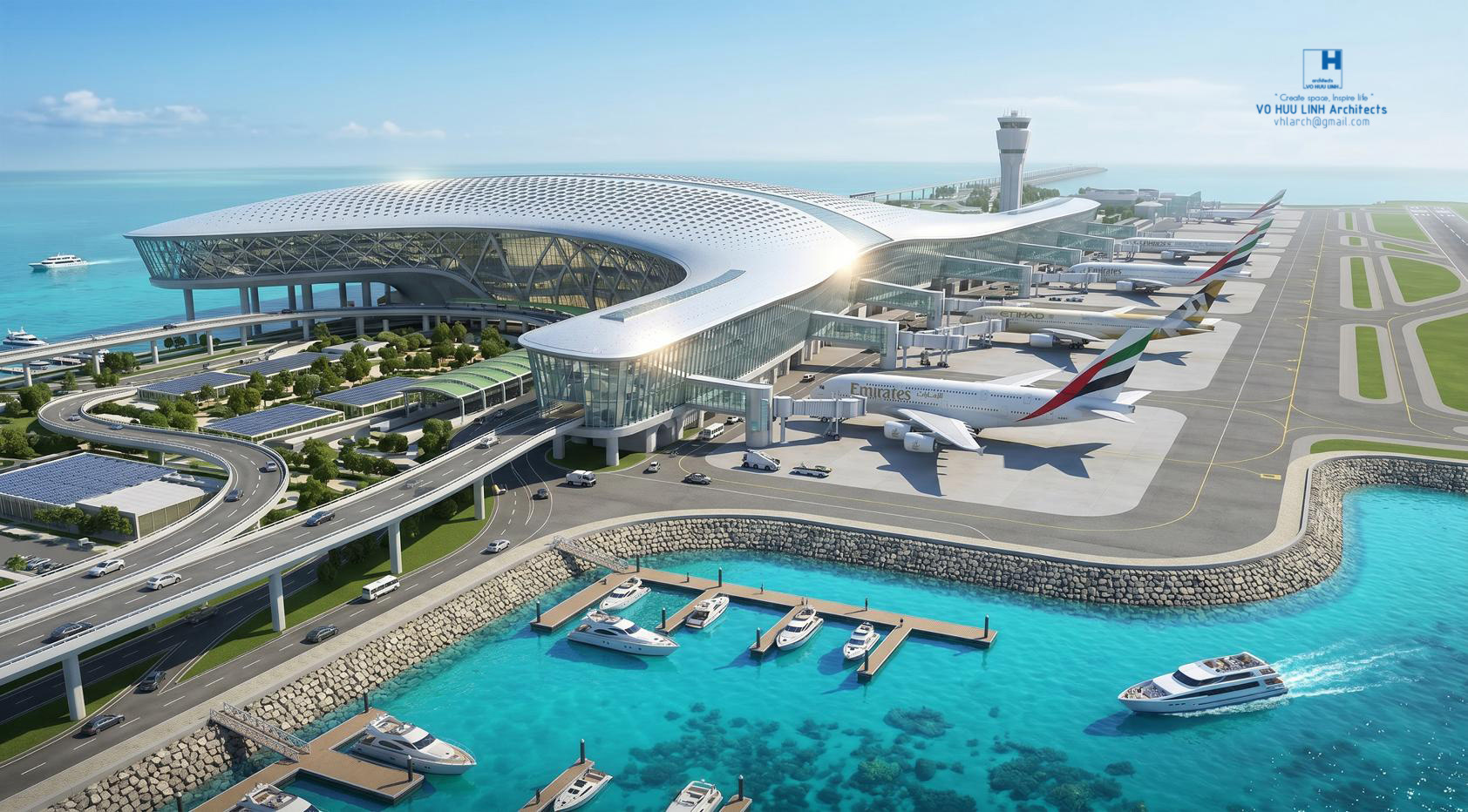
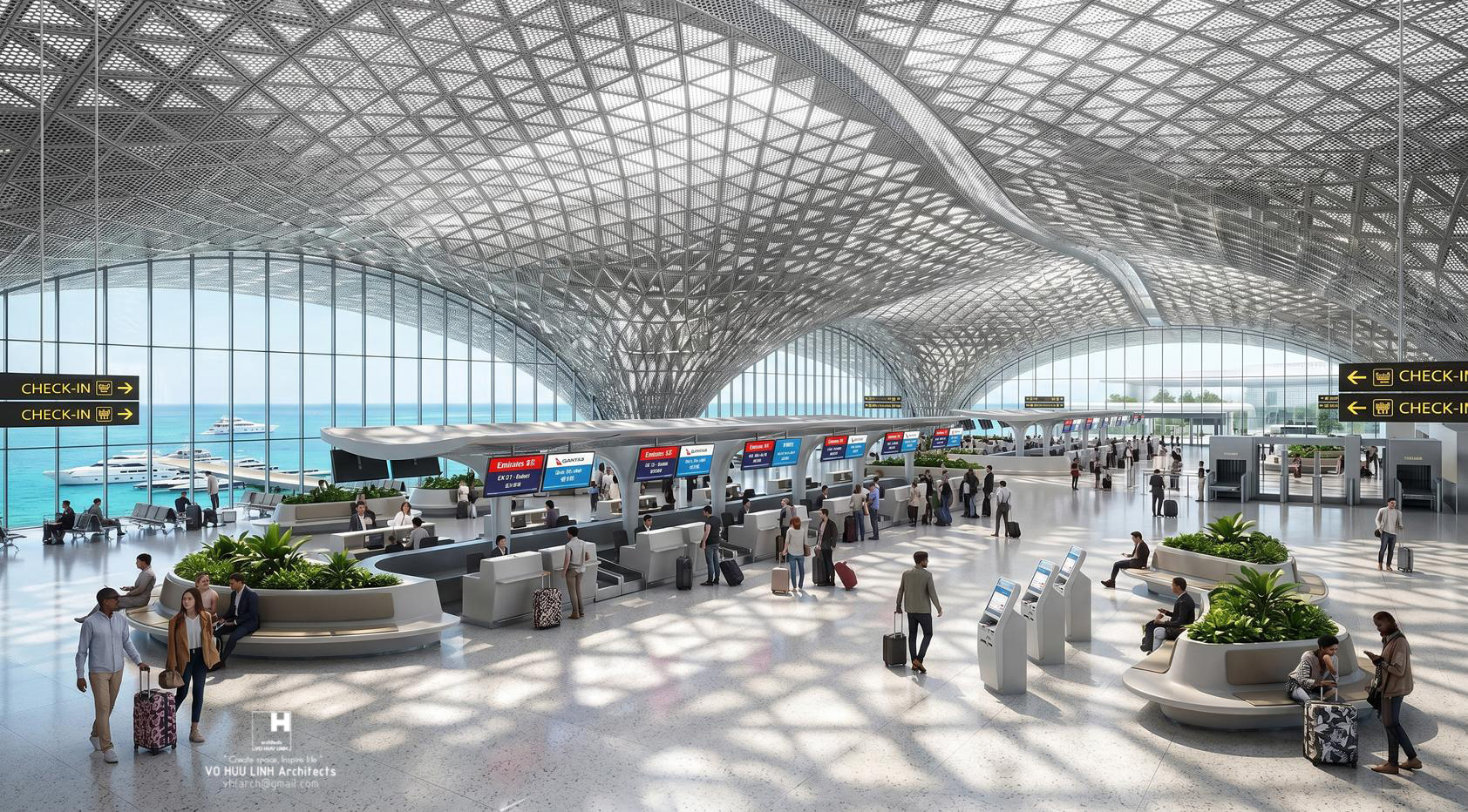
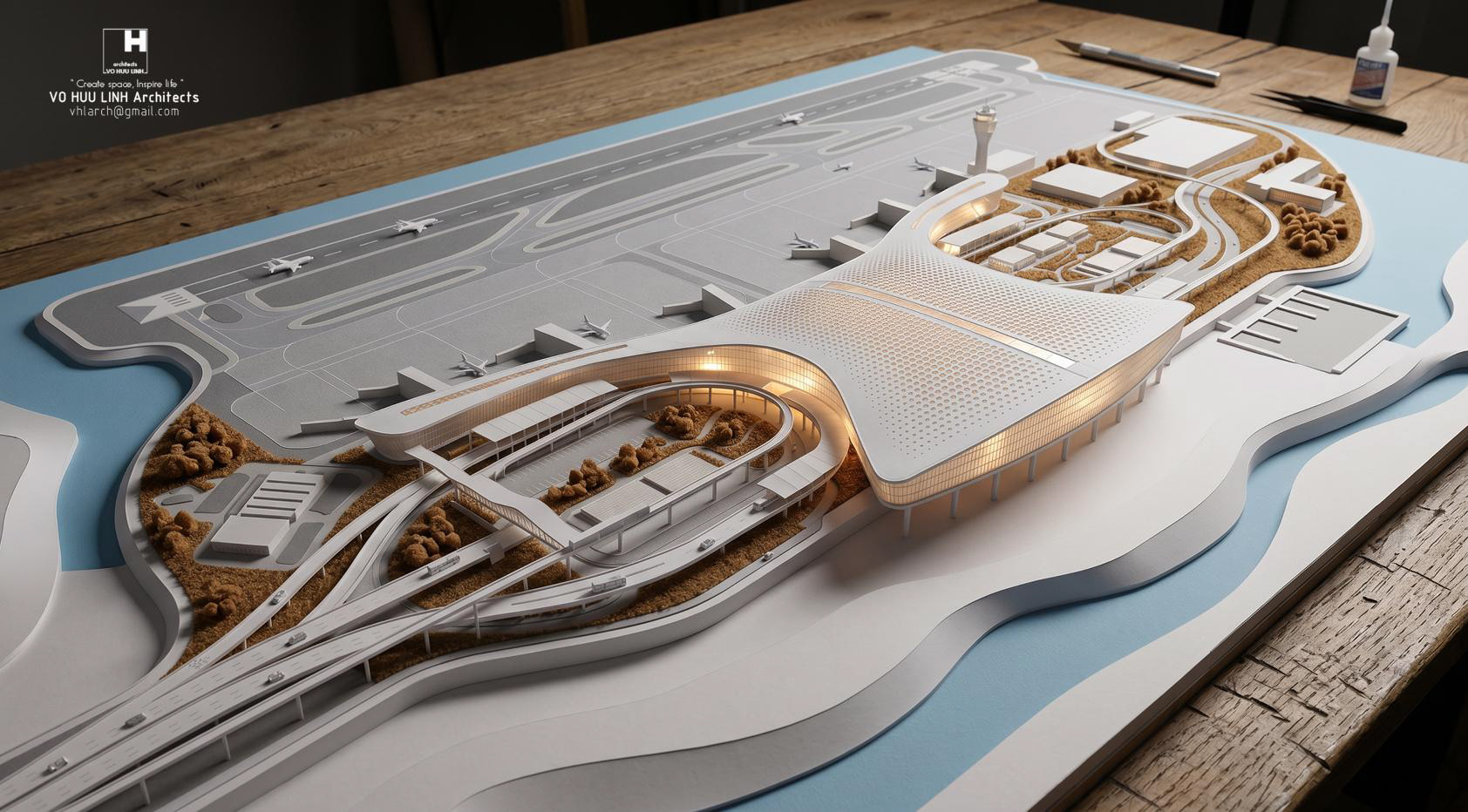
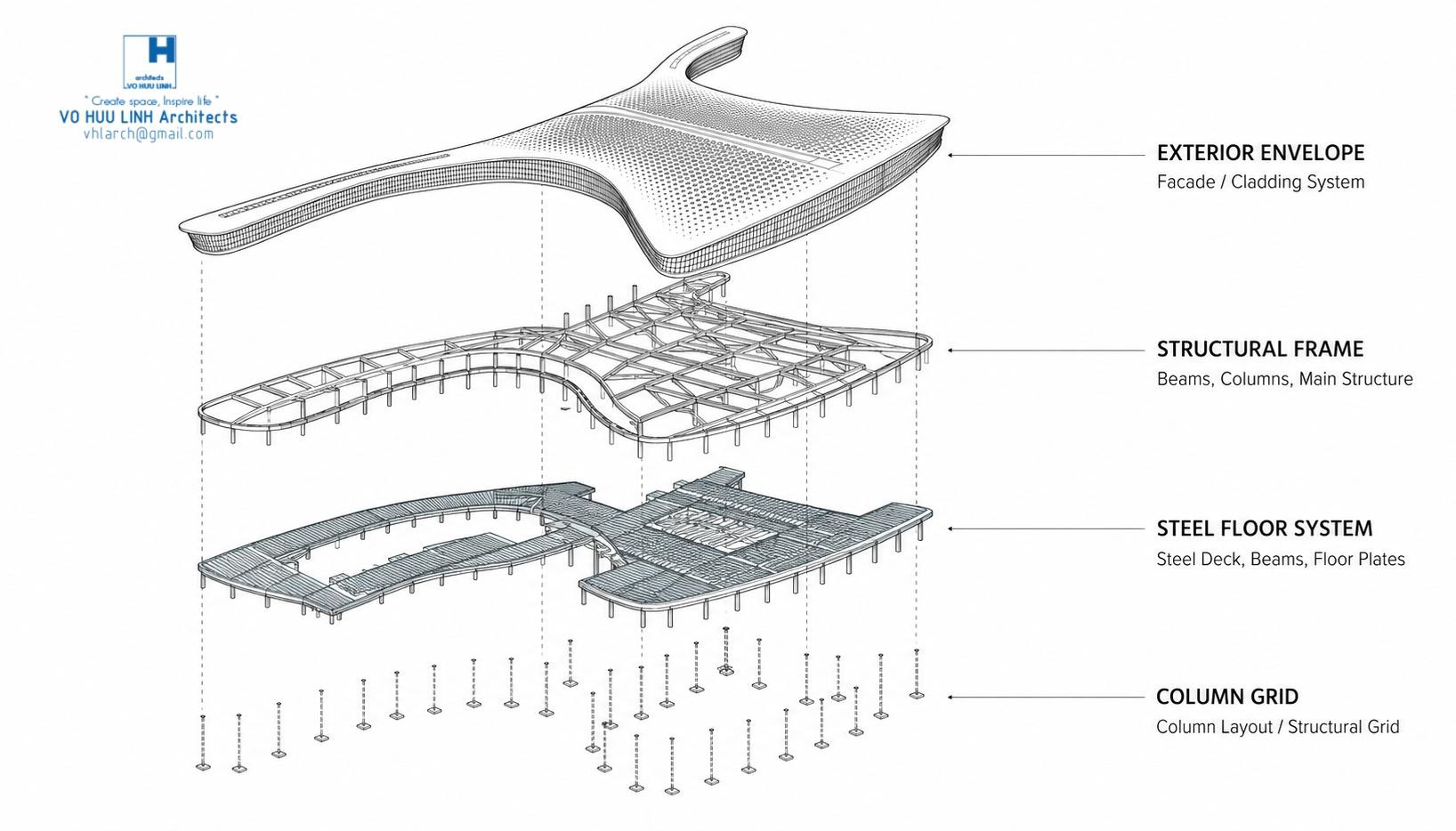
What is particularly notable is that aerodynamics in this project is not treated as an additional engineering layer, but as an integral part of the architectural language itself. The terminal geometry evolves through soft, continuous forms designed to reduce wind resistance while simultaneously creating climatic buffer zones and improving natural ventilation throughout the public spaces.
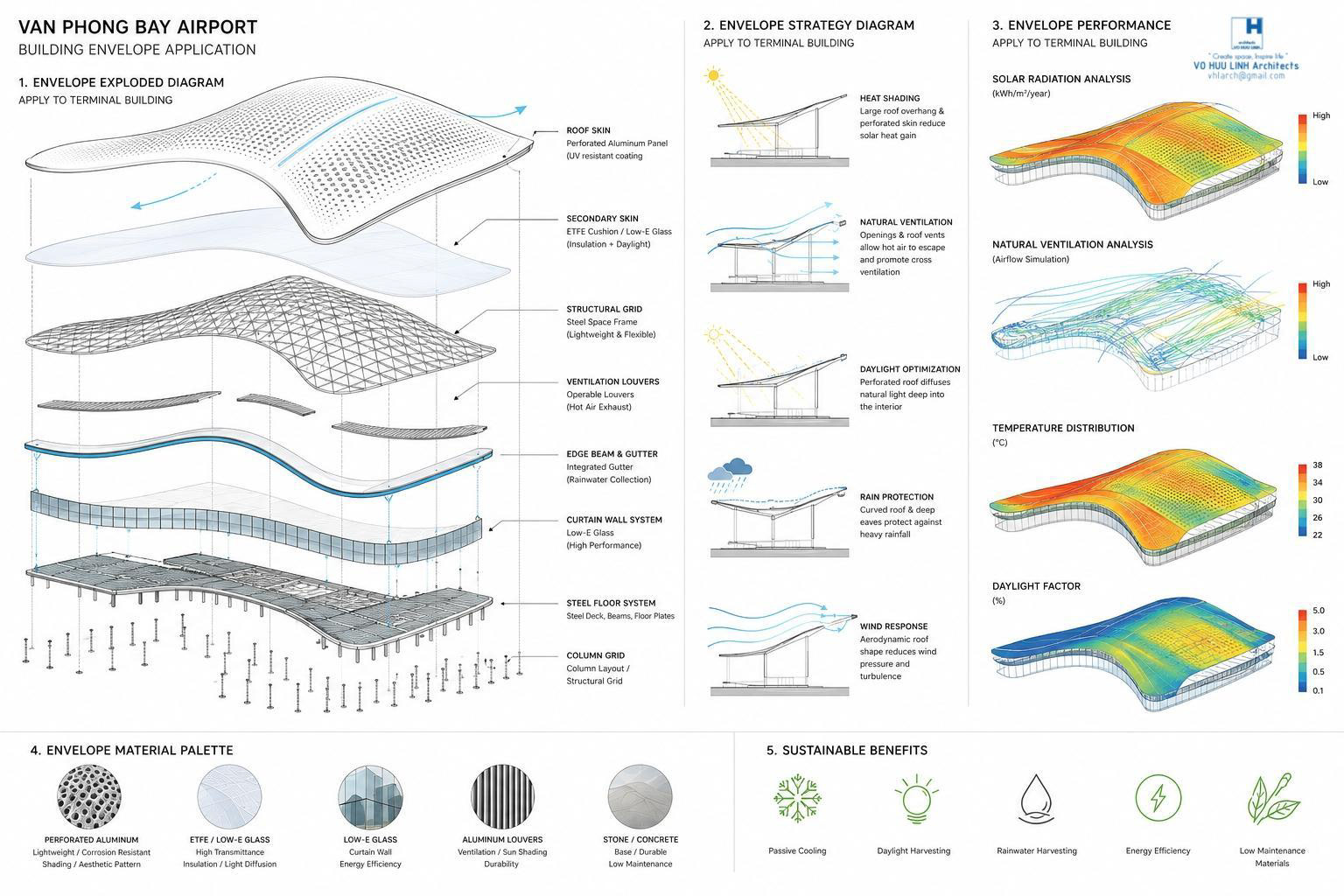
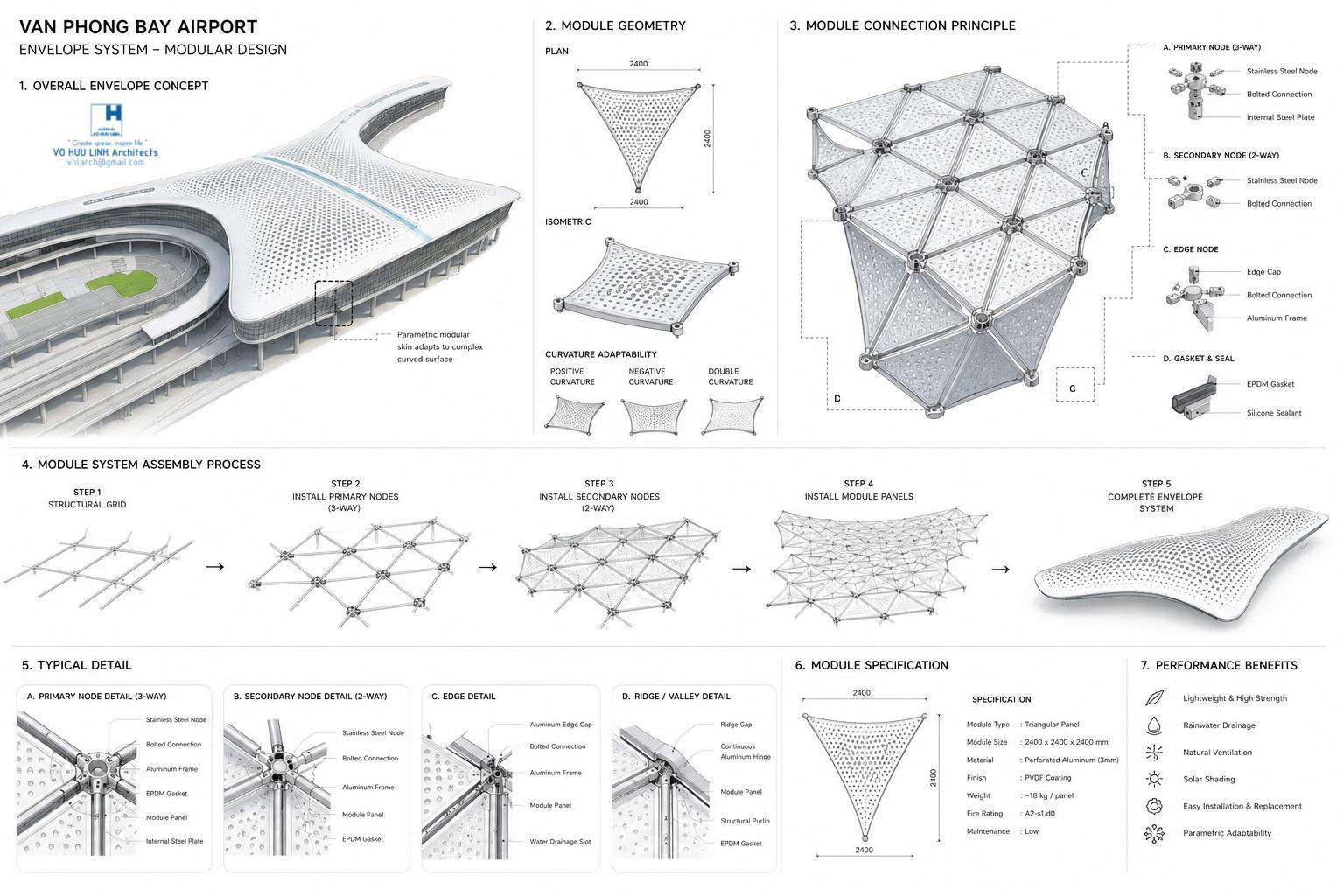
The building envelope reflects the same philosophy. Parametric perforated facades, deep overhangs, and layered climatic skins are not simply formal gestures; they operate as environmental systems responding to intense solar radiation, humidity, salt-laden air, and the constantly changing microclimate of the tropical coastline.
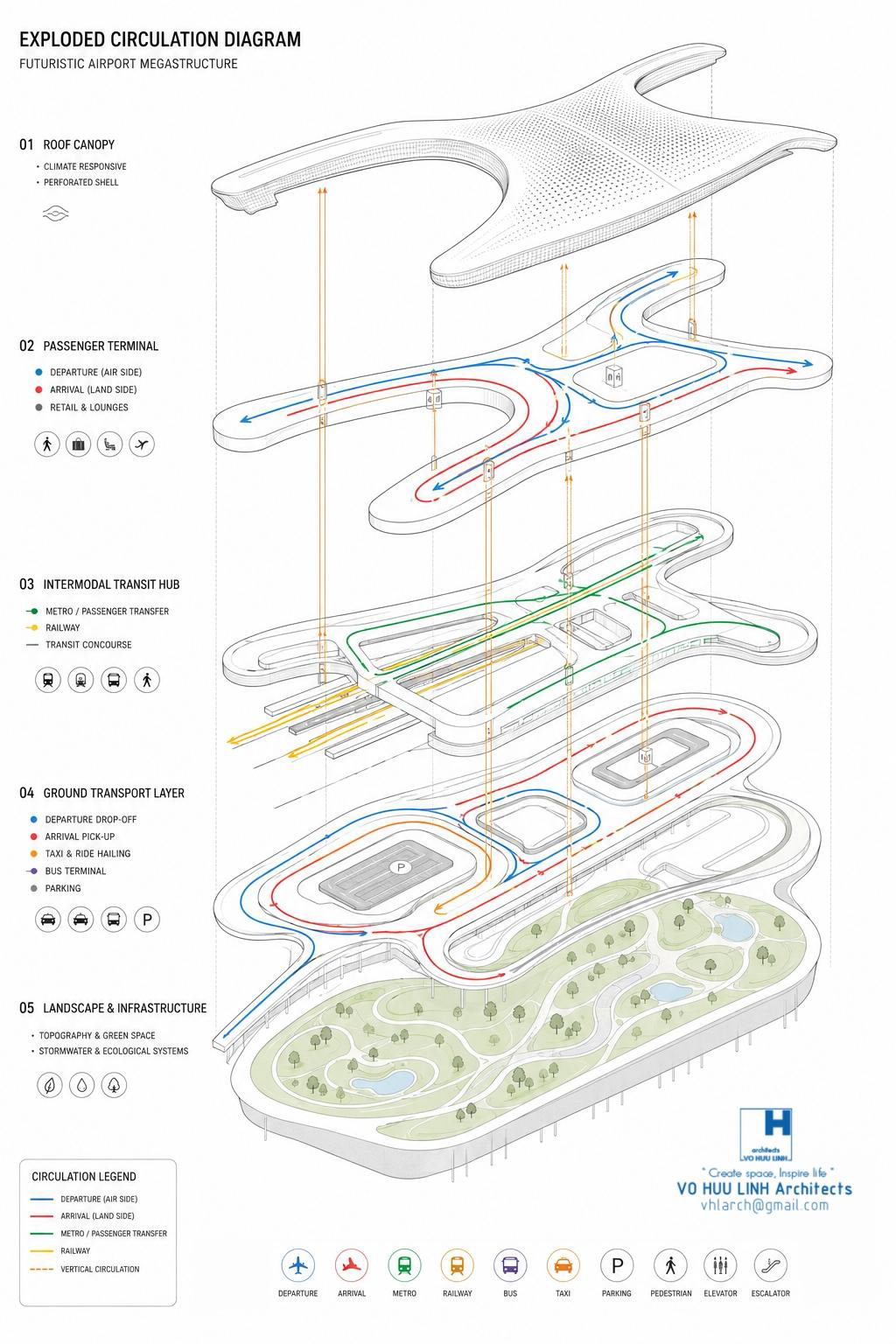
More broadly, the project reflects a significant shift currently emerging in Asian airport architecture: a movement away from closed “mega terminals” toward more open infrastructural systems where spatial experience, local climate, and landscape integration are valued alongside technical performance.
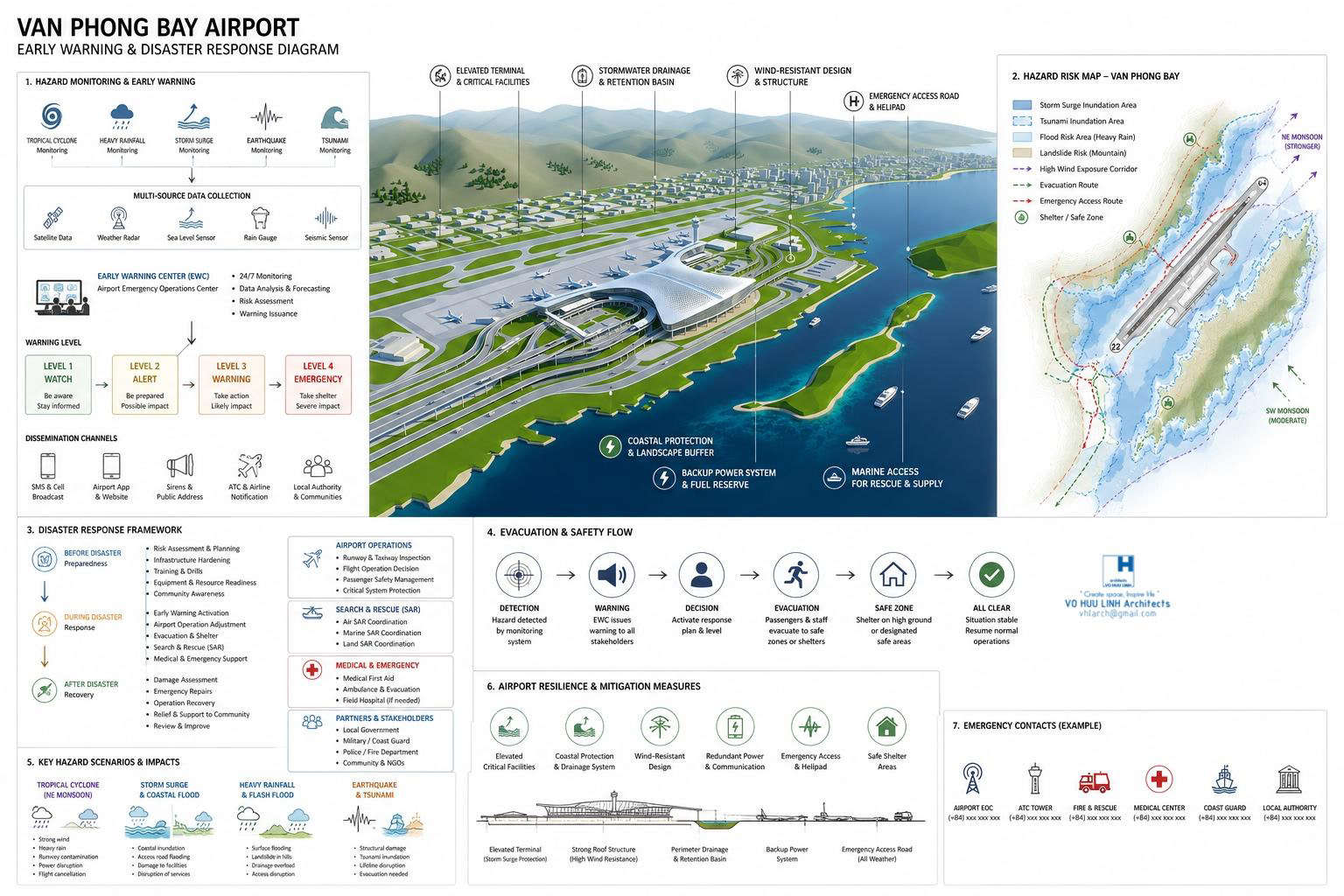
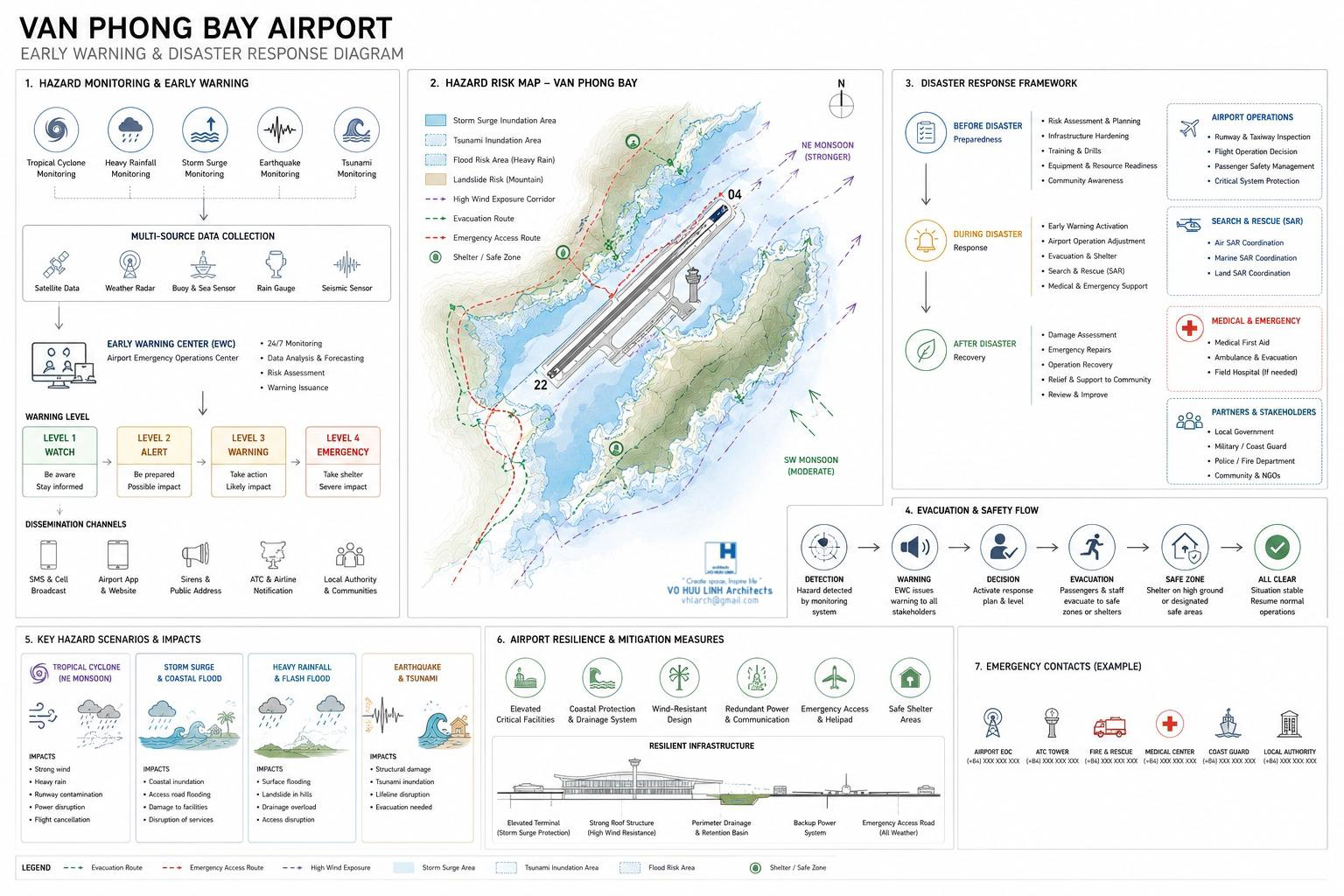
Perhaps most importantly, the project does not attempt to construct an image of the future through technological spectacle. Instead, it seeks a balance between aviation infrastructure and the environmental realities of the coastal landscape. At a time when many coastal cities face mounting pressures from climate change and large-scale urban expansion, this approach suggests an alternative direction for airport architecture — one in which technical efficiency, environmental adaptation, and landscape identity can coexist within a unified design system.
Ultimately, the value of Van Phong Bay Airport Terminal may lie less in the image of a futuristic terminal itself, and more in the questions it raises about the role of infrastructure architecture in a changing climatic era.
Within the design philosophy of Vo Huu Linh Architects, the airport is no longer understood merely as a point of transit, but as an environmental structure capable of engaging with wind, water, terrain, and the everyday life of the coastal territory it inhabits.
#VanPhongBayAirport #VanPhongBayAirportTerminal
#VoHuuLinhArchitects #AirportDesign
#CFDAnalysis #ClimateResponsiveDesign #ParametricArchitecture #TransportationArchitecture #FutureAirport
Project: Van Phong Bay Airport Terminal competition
Type: Concept Proposal
Location: Khanh Hoa, Vietnam
Phase 01 Design Consultant: Vo Huu Linh Architects (VHLArch)
“Tạo không gian – Khơi nguồn sống”
Create Space – Inspire Life
📞, Whatsapp: +84905 926 604
📧 vhlarch@gmail.com
Description:
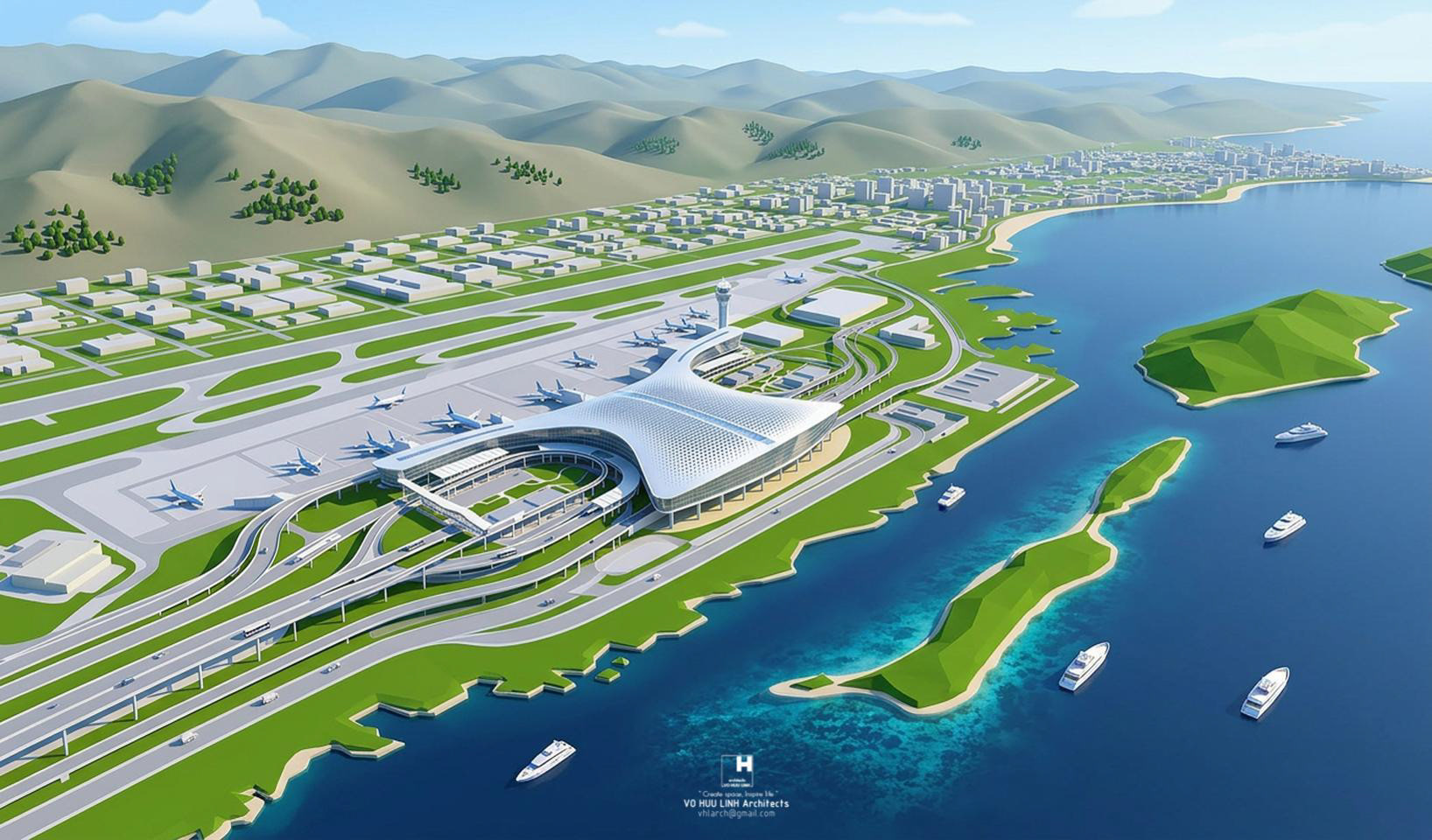
For decades, airports have largely been understood as massive infrastructural machines — environments primarily driven by operational efficiency, passenger capacity, and transportation performance. In many cases, architecture functioned merely as a symbolic shell representing technological progress and urban ambition. Today, however, under the growing pressures of climate change and environmental instability, particularly within coastal territories, this perception is gradually shifting.
Contemporary airports are no longer viewed solely as transportation facilities. Increasingly, they are being reconsidered as complex environmental ecosystems in which architecture must engage directly with climate, geography, and the natural conditions of the territory in which it exists.
Van Phong Bay Airport Terminal, proposed by Vo Huu Linh Architects, is an exploration of this evolving approach.
What distinguishes the project is its treatment of climate as a primary design generator rather than a technical problem resolved at the end of the process. Within tropical coastal conditions, wind becomes a determining force not only for aviation operations, but also for spatial organization and architectural form.
For any airport, runway orientation remains a critical issue. Even minor miscalculations in prevailing wind analysis can affect operational safety and long-term efficiency for decades. As a result, the design team approached the project through detailed studies of seasonal wind patterns, particularly the influence of Northeast monsoon winds, sea breezes, and the aerodynamic interaction between mountains, water surfaces, and large-scale infrastructure.
Through Computational Fluid Dynamics (CFD) simulations, airflow behavior was analyzed across the entire airport environment — including runways, terminal buildings, aprons, and surrounding coastal landscapes. These studies allowed the team to identify turbulence zones, wind acceleration corridors, pressure variations, and stagnant air pockets that could directly influence both environmental performance and spatial experience.
What is particularly notable is that aerodynamics in this project is not treated as an additional engineering layer, but as an integral part of the architectural language itself. The terminal geometry evolves through soft, continuous forms designed to reduce wind resistance while simultaneously creating climatic buffer zones and improving natural ventilation throughout the public spaces.
The building envelope reflects the same philosophy. Parametric perforated facades, deep overhangs, and layered climatic skins are not simply formal gestures; they operate as environmental systems responding to intense solar radiation, humidity, salt-laden air, and the constantly changing microclimate of the tropical coastline.
More broadly, the project reflects a significant shift currently emerging in Asian airport architecture: a movement away from closed “mega terminals” toward more open infrastructural systems where spatial experience, local climate, and landscape integration are valued alongside technical performance.
Perhaps most importantly, the project does not attempt to construct an image of the future through technological spectacle. Instead, it seeks a balance between aviation infrastructure and the environmental realities of the coastal landscape. At a time when many coastal cities face mounting pressures from climate change and large-scale urban expansion, this approach suggests an alternative direction for airport architecture — one in which technical efficiency, environmental adaptation, and landscape identity can coexist within a unified design system.
Ultimately, the value of Van Phong Bay Airport Terminal may lie less in the image of a futuristic terminal itself, and more in the questions it raises about the role of infrastructure architecture in a changing climatic era.
Within the design philosophy of Vo Huu Linh Architects, the airport is no longer understood merely as a point of transit, but as an environmental structure capable of engaging with wind, water, terrain, and the everyday life of the coastal territory it inhabits.
#VanPhongBayAirport #VanPhongBayAirportTerminal
#VoHuuLinhArchitects #AirportDesign
#CFDAnalysis #ClimateResponsiveDesign #ParametricArchitecture #TransportationArchitecture #FutureAirport